At FactCheckAfrica, we have seen firsthand how false information undermines trust, breeds divisions, and clouds public understanding. Our efforts harness evidence-backed journalism, real-time fact-checking, and collective news agency collaborations across Africa to spread fact-containing information in a way to counteract the effects of ill-intentioned information.

However, for this ecosystem to continue thriving, more agency partners, civil rights bodies, technology companies and the government need to continue to support and not censor fact-checking organizations. However, today, Nigeria finds itself in a disputed domain in the information environment where truth, power, identity, security, and democratic ideology have never converged simultaneously in a more complicated way. With disinformation,misinformation, and online scams happening on all fronts, the role of government in the media is less marginalized but rather central to both future democratic governance and collective security.
Recent events between the Federal government and Nigerian Guild of Editors, indicate an awareness of a need to work in a collaborative manner in order to have a protected information environment, rather than a distant antagonistic relationship. The significance of this interaction will need to be subjected to debate in order to assess and contextualize in light of an evolving reform environment in the information and media sector in its bid to face the 2027 elections.

On November 12, 2025, President Bola Ahmed Tinubu delivered a speech at the 21st Annual Conference of the Nigerian Guild of Editors ANEC 2025 in Abuja, becoming the first president of Nigeria to personally attend a conference of the Nigerian Guild of Editors. President Tinubu commended the press in attendance at the conference for their significance in democracy. He emphasised the need for them to showcase their role in being a watchdog in a fair and objective manner. Criticism of government policies must be constructive rather than destructive and sensationalized, President Tinubu emphasised.
The President’s address embraces perhaps the largest paradox in today’s information politics, in which information must be both free and independent but is in fact a factor in maintaining national unity. In this connection, all attendees emphasised that information in media pertaining to this event must serve to improve national cohesion, especially during times when elections are being conducted.

The Minister of Information and National Orientation, Mohammed Idris, who praised the presence of the country’s president, noted the expansion of the media environment in the country, with over a thousand broadcasting stations in operation and an avid commitment to press freedom in accordance with the country’s constitutions.
Conversely, the Nigerian information environment is very far from being secured. Such misinformation, disinformation, and other kinds of creatively produced digital information, such as deepfakes and AI-generated narrative content, have become serious issues. No less serious are they when it comes to public trust, democratic accountability, social stability, good governance, and journalism.
At the beginning of the year, the Nigerian Editors resolved to establish fact-checking desks in newsrooms in a bid to respond to rising waves of fake news. The project, which was initiated with the support of international partners and local media bodies, was to help improve the manner in which false information is detected in journalism. Such efforts symbolize a collective awareness in the profession of the need for a lot of work to be accomplished internally. A collective empowerment of fact-checking modules, editorial collaborations, and capacity-building workshops have come to symbolize an intervention rather than an ad hoc piece of reporting.

The government’s worry over misinformation does not remain at an ideological level. High ranking government officials, including but not limited to the Minister of Information, have denounced the application of AI deepfakes in demagoguery against public figures and distorting mass perception. Recently, the government drew attention to the increasing misuse of artificial intelligence technology in creating incriminating images and video clips of government officials.
Such a recognition by a major government department is significant in at least two respects. One, it highlights a government-level realization that information disorders are not simply abstractions in books but have tangible political and social overtones. Two, this government department recognizes that not only is AI a double-edged sword in being able to empower both citizens and infrastructures, but it can distort and mislead if government regulation is not placed on it.
In this light, institutions such as the National Information Technology Development Agency have continued to push for frameworks in dealing with technological crises, to the point where they have suggested AI task forces that can aid in dealing with misinformation during critical political months. Of equal prominence are the recent statements issued by the Nigeria Police Force, under the leadership of Inspector General Kayode Egebokun, concerning the negative effects of misinformation on the credibility of law enforcement and national stability.
The IGP spoke to the participants at the 2025 Police Public Relations Officers’ Conference in Abuja, describing how it pained him to see the level of damage perpetrated against the image of the police based on false accounts, doctored clips, and circulated videos that were being portrayed as if they were happening at the time of such content being produced. He emphasised the need to communicate in time and in accuracy, with proactive PR officers decimating misinformation rather than waiting for the “airwaves to be saturated with misinformation.”
Such a stance is highly relevant because it brings misinformation under a matter of national security rather than being confined to news coverage. However, it equally brings into focus the collective interest that institutions of governance, civil authorities, and news professionals share in protecting the informational commons against ill-intentioned or mistaken information.
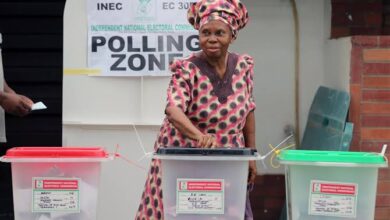
During the electoral bye-elections of 2025, the police warned citizens against sharing misleading information through social media and journalists, especially in matters pertaining to old videos and misleading content which can negatively affect electoral peace. The dynamic interplay between government and media institutions in the Nigerian state must be considered in light of such broader contexts of change involving structural, political, and technological shifts in society.

Although a very vibrant and pluralistic media environment, the Nigerian media space is not without challenges. In this connection, criminal defamation laws, so-called false news laws, and a periodic intimidation of some journalists have proved to be the weak underbelly of press freedom, making it complicated in all environments where independence and regulation coexist. On the other hand, the digital transition in public communication not only empowered citizens but also provided opportunities for negative actors to play on virality, algorithmic amplification, and anonymity. In this ecosystem, collaboration between government representatives and media actors will never imply co-option but rather a sense of common standards in verification, a common shield against fake news, and common treatment of pluralism.
But all this is a balance where the state can function in ensuring democratic systems, security, and information integrity but at the same time needs to be protected against any move which might have an unintended consequence of undermining critical voices and freedom of press. Likewise, media institutions need to come out with their performance in their role as a public watchdog in observing moral standards not to fall into sensationalism which breeds distrust.

The parameters of an efficient cooperation between government and media in ensuring the information space have to be based on a set of basic principles. First, joint fact-Verification Initiatives, the government bodies and independent news networks can work towards creating common verification schemes and datasets which help in quick authentications of facts and sources by journalists.
Second, Crisis Information Handling Protocols, in situations concerning matters such as elections, health crises, or crises of security, information handling protocols can be established in such a way that they can help in facilitating information delivery to both media and relevant authorities with nimble accuracy through implementation. As a principle, digital literacy awareness programs will help in civil society being adept in recognizing misinformation, deepfakes, AI manipulation, and verification capabilities by creating a network in this way. Third, balance must be drawn in such a manner that it focuses on maintaining security in a country with minimal impact on media freedom.