By: Oluwatoyin Hawal Momolosho
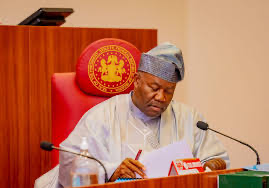
Claim: Social media posts allege that the Speaker of the House of Representatives, Rt. Hon. Abbas Tajudeen, PhD, GCON, condemned Nigeria’s borrowing policy.

Verdict: False!
However, the Speaker never condemned borrowing. His remarks were misrepresented.
Verification:
Findings by FactCheckAfrica show that the claim stems from comments attributed to Speaker Abbas Tajudeen during the 11th Annual Conference and General Assembly of the West Africa Association of Public Accounts Committees (WAAPAC). At the event, the Speaker was represented by Hon. Babatunde Salam, a PDP lawmaker.
A statement by his PA on New media noted that Abbas Tajudeen did not speak against borrowing. Instead, he stressed that public debt, when managed prudently, can be a tool for growth and prosperity. He made it clear that the legislature’s constitutional role is to ensure accountability so that every naira borrowed delivers real value to Nigerians.
He further pointed out that President Bola Tinubu, is taking steps to reduce reliance on loans through stronger non-oil revenue mobilisation. According to him, Nigeria has already met its 2025 revenue target ahead of schedule without resorting to new borrowing, a sign of responsible fiscal management.
Crucially, the Speaker did not call for an end to borrowing. His position was that loans must be tied to visible development outcomes such as schools, hospitals, roads, and innovation, and that parliament has a duty to safeguard Nigeria’s financial future through oversight and transparency.
Why This Matters?
Misinformation about public finance can mislead citizens into believing that the government or parliament has taken a stance it has not. In this case, the Speaker’s actual comments were twisted to create political controversy.
Conclusion:
The claim that Speaker Abbas Tajudeen condemned Nigeria’s borrowing is false. His message was not against borrowing but against mismanagement of debt. His position remains consistent; responsible borrowing, prudent fiscal management, and stronger oversight for sustainable development.