(FactCheckAfrica’s Media Literacy Journey)
Every year, International Fact-Checking Day offers a moment to pause and reflect, not just on the importance of verifying information, but on what it takes to do so in practice. In 2026, this reflection carries even greater urgency. The rapid rise of artificial intelligence has transformed misinformation into something faster, more scalable, and harder to detect. From synthetic videos to AI-generated narratives, the challenge is no longer just verifying information, but verifying reality itself.
In Africa, where information ecosystems are rapidly evolving, this day carries particular weight. It is a reminder that access to accurate information is not guaranteed; it must be built, defended, and continuously strengthened.

Across the continent, misinformation does not exist in a vacuum. It intersects with language diversity, political complexity, economic inequality, and uneven digital access. With over 500 million internet users across Africa, and messaging platforms like WhatsApp serving as primary information channels for millions, false claims can travel faster than corrections, often amplified through trust networks: family groups, religious communities, and social circles where verification is not always prioritised.
In this context, fact-checking is not just a technical exercise. It is a public service. At FactCheckAfrica, this reality shapes everything we do.
Building Trust in Complex Information Environments
FactCheckAfrica was founded on a simple but urgent premise: that credible, accessible, and timely information is essential for democratic participation and social stability. Our work sits at the intersection of fact-checking, media literacy, digital safety, and civic technology, with a particular focus on how misinformation affects women, young people, and underserved communities.
We do not operate under the assumption that misinformation is merely a knowledge gap. In many cases, it is a trust gap. People believe and share false information not only because it is convincing, but because it comes from sources they trust.
In what researchers increasingly describe as networked trust environments, information gains credibility not through verification, but through familiarity and identity alignment. Addressing this requires more than publishing corrections. It requires sustained community engagement, credibility built over time, and making verification tools accessible to non-experts.
What Fact-Checking Looks Like on the Ground
In practical terms, fact-checking in Africa often involves navigating constraints that are less visible in global conversations. A single claim (say, a viral message alleging that a new government policy restricts access to education for girls) may require verification across multiple sources: official documents, expert interviews, historical policy context, and on-the-ground perspectives. This process is rarely straightforward. Public records may be incomplete, officials may be difficult to reach, and the claim itself may exist in multiple versions across languages and platforms.
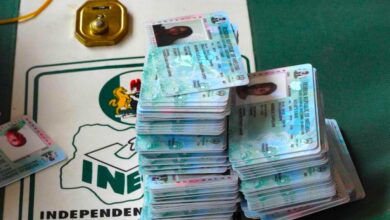
For instance, during a recent election cycle, a widely circulated message falsely claimed that polling units in certain regions had been relocated overnight. The message spread rapidly through WhatsApp groups, discouraging voter turnout in affected communities before it was debunked. By the time corrections emerged, the damage had already begun.

Language adds another layer of complexity. A misleading claim shared in English may take on different meanings when translated into Hausa, Yoruba, Swahili, or other local languages. Fact-checking, therefore, is not just about accuracy. It is about contextual accuracy.
We have also seen how misinformation evolves. During elections, false claims about candidates or voting processes can be coordinated and targeted. In public health contexts, misinformation can discourage vaccination or promote unsafe remedies. In gender-related issues, harmful narratives can silence women, discredit survivors, or normalise abuse.
FactCheckAfrica’s Approach: Beyond Verification
FactCheckAfrica’s work extends beyond publishing fact-checks. We focus on building systems that make accurate information more accessible and misinformation less harmful.
Community-Centred Fact-Checking: We engage directly with communities, particularly young people and women, to build their capacity to identify and respond to misinformation. Through workshops, training sessions, and collaborative projects, participants learn how to question claims, verify sources, and share accurate information within their networks.
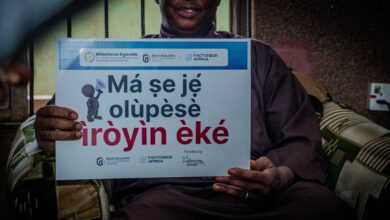
For media literacy to take root, it must exist not only in newsrooms but in classrooms and communities. This conviction drove our Fact-Checking and Digital Rights Youth Conference, a landmark initiative that took our team to university campuses across Nigeria’s six geopolitical zones, as well as grassroots outreach programmes reaching hundreds of rural communities and thousands of citizens.
Media Literacy and Education: Our media literacy programmes are designed to translate complex verification processes into practical, everyday skills. From university classrooms to community centres, we work to ensure that fact-checking is not limited to professionals.
Facts published on a website can only travel so far. FactCheckAfrica has gone a step further by developing a comprehensive fact-checking and media and information literacy curriculum for higher institutions in Nigeria. With modules spanning critical information literacy, digital and data literacy, media literacy, civic sensibility, and the use of AI and open-source intelligence (OSINT), the curriculum reflects a growing consensus: verification must be embedded into how young Africans learn to engage with information.
Technology and Innovation: Through tools like MyAIFactChecker, we are exploring how artificial intelligence can support verification workflows, simplify fact-checking processes, and expand access to reliable information.
Designed to lower the barrier to entry, such tools can assist with claim detection, streamline verification steps, and improve accessibility across different user groups. In multilingual and resource-constrained environments, AI, when responsibly deployed, can help bridge the gap between complex verification processes and everyday information needs. Technology is not a silver bullet. But when combined with human judgment and ethical standards, it becomes a powerful enabler.
Partnerships and Collaboration: Fact-checking is inherently collaborative. We work with journalists, civil society organisations, educators, and media platforms to strengthen the broader information ecosystem.
These partnerships extend our reach and ensure that verified information travels further into the spaces where misinformation often spreads fastest.
Measuring Impact in Subtle but Meaningful Ways
The impact of fact-checking is not always immediately visible. It is rarely measured in viral moments or headline metrics.
Instead, it appears in quieter but meaningful ways: a student who questions a misleading post before sharing it; a journalist who strengthens a report with verified data; a community leader who relies on accurate information to guide decisions; a woman who feels more confident speaking publicly, equipped to verify claims and counter misinformation.
As our founder, Abideen Olasupo, often puts it: “Fact-checking is not just about correcting the record. It’s about shifting how people engage with information over time.” This shift, towards critical thinking, accountability, and informed participation, is at the heart of our work.
Looking Ahead: Strengthening the Ecosystem
As we mark International Fact-Checking Day, the focus is not only on what has been achieved, but on what lies ahead.
There is a growing recognition that fact-checking must be integrated into broader systems, education, media, technology, and governance. The goal is not only to counter misinformation, but to build resilient information ecosystems: systems capable of withstanding, adapting to, and recovering from waves of falsehoods.
Fact-checking cannot, and should not, rest on the shoulders of a few organisations alone. It is a shared responsibility. The future of our information ecosystem will be shaped by the choices each actor makes today. When journalists cut corners, misinformation thrives. When platforms delay action, harm scales. When citizens share without verifying, falsehoods gain legitimacy.
On this International Fact-Checking Day, we invite:
- Journalists to prioritise accuracy and verification
- Policymakers to support enabling environments for credible information
- Educators to integrate media literacy into learning systems
- Technology platforms to strengthen safeguards against misinformation
- The public should pause, question, and verify before sharing
Because in the end, facts do not defend themselves, people do.
At FactCheckAfrica, we remain committed to doing the work. Because accurate information is not just a resource. It is the foundation of trust, accountability, and democratic resilience.