BY: Quadri Yahya
Ahead of Nigeria’s 2027 elections, experts have recommended safeguards for citizens, civil society organisations and others to implement to protect the elections.
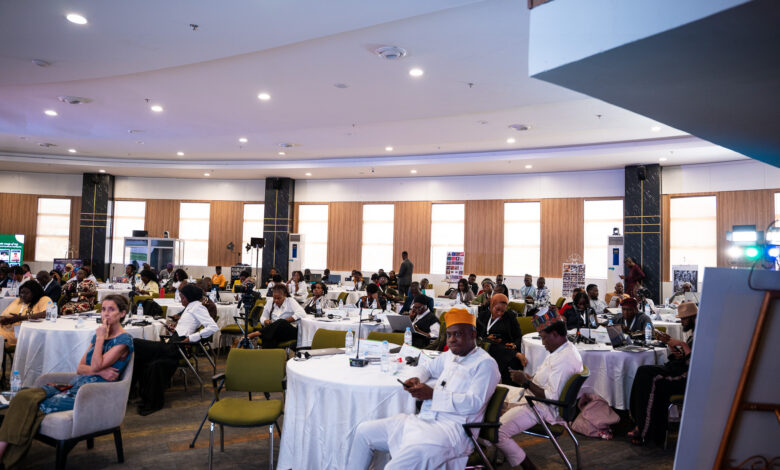
The recommendation was given at an event by FIAP, through its implementing partner FactCheckAfrica, held on Tuesday in Abuja.
The Chief Press Secretary of the Independent National Electoral Commission, Dayo Oketola assured that INEC has set up verification pillars to ensure that the legitimacy of the election is not undermined.
Speaking on behalf of Prof. Joash Ojo Amupitan, Chairman, Independent National Electoral Commission, Oketola said the commission has put in place an automated verification system as well as multistakeholder engagements and collaboration with National Orientation Agency, CSOs and fact-check organisations.
Further, Project Coordinator of the European Union support to ECOWAS in Peace, Security and Governance (EPSG), María Belén Álvaro Sánchez also admitted that fighting misinformation requires joint efforts.
‘Citizens are victims of misinformation’
The EPSG Project Coordinator also stressed that citizens are sometimes victims of misinformation orchestrated by individuals in power or those seeking power.
According to her, sources of misinformation can be traced to powerful individuals, though citizens can unknowingly amplify such information campaigns.
Stressing the ways misinformation actors leverage local languages, the founder of FactCheck Africa, Abideen Olasupo also disclosed that the outlet have implemented programmes to address what he calls “hyper-local manipulation”, which refers to the exploitation of local languages to spread misinformation.
The Ambassador, Embassy of Spain, Mr. Félix Costales urged organisations to continue the efforts to sanitise the information landscape.
However, he cautioned that “the fight against misinformation shouldn’t be a weapon against legitimate political debates.”
‘The internet malinformed the world of my private life’
Delivering her keynote address, Director, International Media and Information Literacy Institute, Dr. Sharon Omotoso explained how her private life was impacted by misinformation.
She revealed that someone was wrongly named as her husband in an online publication, adding that the ways misinformation affects individuals vary based on gender.
According to her, gendered misinformation can lead to either politics of retention or politics of succession, in the sense that women targeted in coordinated misinformation can be forced to abandon political ambitions, to be replaced by men.
She added that more fact-check organisations are needed to be able to extinguish the fire of misinformation on social media platforms across West Africa.
The scholar also raised crucial questions about the potential of fact-checking to be politicised, suggesting that media outlets should be careful not to serve as agents of political figures.
She also encouraged media outlets to fact-check details of people posted online, citing that misattribution can result from wrong spelling of names.
Participants at the two-day International Multistakeholder Forum on Disinformation in Electoral Contexts in West Africa, include fact-checkers, social media influencers and CSOs across Nigeria, Gambia and Benin Republic.
The event is parts of the ongoing programmes by the FactCheckAfrica across West Africa.