EXPLAINER: What Nigerians Should Know About El Niño and the Projection of 31,400 Heat-Related Deaths

BY: Oluwaseye Ogunsanya
As warnings about a potentially very strong El Niño spread across social media, claims that Nigeria could experience extreme heat and thousands of deaths have sparked concern.
The concern follows a report by the University of Chicago’s Climate Impact Lab, which projects that Nigeria could record 31,400 additional heat-related deaths between September 2026 and February 2027. The researchers also estimate that extreme heat could contribute to 451,000 excess deaths globally between June 2026 and February 2027.
But what is El Niño, how could it affect Nigeria, and does the projection mean tens of thousands of Nigerians will definitely die?
What is El Niño?
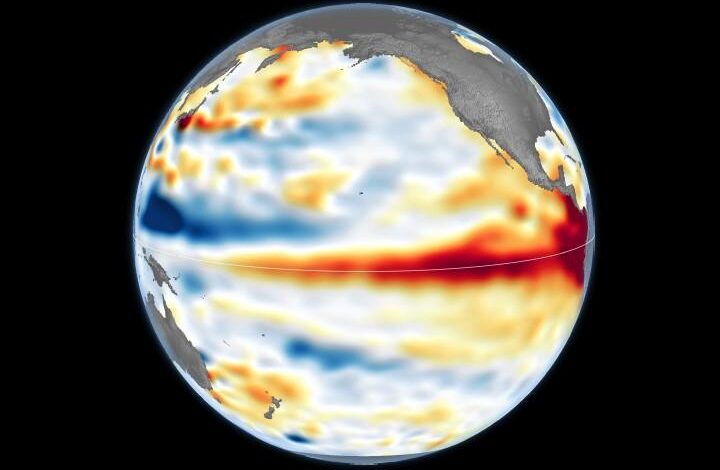
El Niño is a natural climate phenomenon characterised by unusually warm sea-surface temperatures in the central and eastern equatorial Pacific Ocean. It is part of the El Niño–Southern Oscillation (ENSO), a climate cycle that also includes La Niña, its cooler phase, and ENSO-neutral conditions, when neither phase is present.
According to the US National Oceanic and Atmospheric Administration (NOAA), El Niño occurs on average every two to seven years and typically lasts nine to 12 months.
Under normal conditions, trade winds blow from east to west across the tropical Pacific, helping to push warm surface water towards Indonesia and Australia while allowing cooler water to rise in the eastern Pacific, near South America.
During El Niño, these trade winds weaken, allowing warm water to spread eastwards. The resulting changes in ocean temperatures and atmospheric circulation alter rainfall and temperature patterns in different parts of the world.
These changes do not affect every country in the same way. El Niño can contribute to drought in some regions and heavier rainfall in others, but the outcomes vary according to location, season and other climate influences. NOAA explains these regional differences here.
Why is El Niño trending now?
The current El Niño has strengthened rapidly and is forecast to remain strong or very strong into 2027.
In its 3 September 2026 update, the World Meteorological Organization (WMO) said the event was expected to intensify further and persist into early 2027, increasing the risk of unusual rainfall and temperature patterns.
Similarly, NOAA’s 8 October 2026 ENSO forecast gave more than an 83 per cent probability that a strong-to-very-strong El Niño would persist through January–March 2027.
The forecasts have raised concern because a very strong event increases the likelihood of significant climate impacts. However, NOAA cautions that impacts consistent with El Niño are more likely, not guaranteed, even during an event of this magnitude.
The term “Super El Niño”, widely used in social media posts, is an informal description rather than a separate phase of ENSO. NOAA classifies El Niño events by their strength, including weak, moderate, strong and very strong. See NOAA’s explanation of El Niño classifications.
Does El Niño mean Nigeria will experience extreme heat?
Not automatically. El Niño can influence weather patterns thousands of kilometres from the Pacific Ocean, but it does not determine Nigeria’s weather on its own. The West African monsoon, conditions over the Atlantic Ocean and regional atmospheric circulation also influence rainfall and temperature patterns. The World Meteorological Organization explains that El Niño’s impacts vary by region.
Nigeria’s official weather outlook provides important context for understanding the potential effects of the developing El Niño.
In its 2026 Seasonal Climate Prediction, published in February, the Nigerian Meteorological Agency (NiMet) forecast normal-to-above-normal rainfall across much of the country and above-normal temperatures in most areas. However, that forecast preceded the subsequent strengthening of El Niño.
NiMet later issued a Seasonal Climate Prediction Update on 13 August 2026, confirming the onset of a strong El Niño event and outlining possible implications for Nigeria.
For August to October 2026, the agency forecast normal-to-above-average temperatures across Nigeria and said El Niño’s temperature impact might not be significant during that period. It anticipated normal-to-above-normal rainfall across much of northern Nigeria, while parts of the south-west and Cross River State were expected to experience normal-to-below-normal rainfall. The update also discussed potential implications for agriculture, water resources and energy.
However, the August update covers a specific three-month period. It should not be treated as a definitive forecast for the entire period through February 2027.
Subsequently, the WMO’s September outlook indicated that El Niño was expected to strengthen further and persist into early 2027. Meanwhile, the Climate Impact Lab projected 31,400 additional heat-related deaths in Nigeria between September 2026 and February 2027.
These sources address different aspects of the risk. NiMet provides a Nigeria-specific seasonal forecast, while the Climate Impact Lab estimates potential mortality using projected temperatures and research on heat-related deaths. The mortality figure is a modelled estimate, not a confirmed death toll.
In its October 2026 assessment, the Famine Early Warning Systems Network (FEWS NET) also identified moderate rainfall deficits in northeastern Nigeria, while reporting more favourable seasonal performance across parts of the Sudano-Guinean zone of West Africa. This highlights the importance of considering regional differences rather than assuming that all parts of Nigeria will experience the same conditions.
The available evidence therefore does not establish that El Niño will cause nationwide extreme heat, drought or flooding. Updated local forecasts and advisories are needed to assess how conditions may develop in different parts of the country.
What is behind the projection of 31,400 additional deaths in Nigeria?
The figure comes from the Climate Impact Lab’s report, “451,000 at Risk”, which estimates the potential increase in heat-related deaths during the current El Niño.
The researchers project 451,000 additional heat-related deaths globally between June 2026 and February 2027, compared with the corresponding months of an average year. For Nigeria, they estimate 31,400 additional deaths between September 2026 and February 2027, the highest projected national total in their analysis. The report also estimates 66,800 additional heat-related deaths across the Sahel during the same period, with nearly half projected to occur in Nigeria.
According to the report’s methodology, the researchers combined temperature projections from the European Centre for Medium-Range Weather Forecasts’ seasonal forecast with estimates of the relationship between temperature and excess mortality across 24,378 regions worldwide. They compared projected deaths with a 1996–2025 baseline and accounted for uncertainty in both temperature forecasts and estimates of heat-related mortality.
These figures are model-based projections of deaths above the expected baseline, not deaths already recorded or a certainty that the stated number of people will die. The Climate Impact Lab also notes that the full methodological details will be published in an upcoming peer-reviewed journal, a limitation readers should consider when interpreting the estimates.
Will 31,400 Nigerians definitely die from the heat?
No. The projection does not mean that 31,400 deaths are inevitable.
The Climate Impact Lab presents the estimate as a warning about potential mortality under forecast temperature conditions and as a basis for targeting preventive measures. Its report identifies interventions such as heat warnings, outreach to vulnerable people, cooling centres, hydration stations, worker protections and stronger health-system capacity as possible ways to reduce heat-related harm.
The World Meteorological Organization also emphasises the importance of monitoring forecasts and taking early action as the event develops.
The figure should consequently be understood as a risk estimate that can inform preparedness, not a confirmed death toll or a prediction that Nigeria is certain to experience a particular level of disaster.
Could El Niño cause drought, flooding or food shortages in Nigeria?
El Niño can alter rainfall patterns, but the effects differ across regions. A rainfall deficit in one area does not mean the entire country will experience drought, just as heavy rainfall in one location does not establish a nationwide flood threat. NOAA’s overview of El Niño explains that the phenomenon can produce different, sometimes contrasting, outcomes around the world.
As discussed above, FEWS NET has identified rainfall deficits in northeastern Nigeria, while seasonal performance has been more favourable in parts of the Sudano-Guinean zone. The agency warns that rainfall anomalies can affect agricultural production, income and food security, but the extent of these effects depends on local conditions and other existing pressures (FEWS NET, October 2026).
It is therefore premature to claim that El Niño alone will cause a nationwide food crisis or a particular increase in food prices. Such outcomes would depend on the extent and location of rainfall anomalies, their effects on production and livelihoods, and wider market and economic conditions.
Is climate change responsible for El Niño?
El Niño is a naturally occurring climate phenomenon, not something caused by climate change. However, it develops within a world that is warming because of human activities.
The WMO’s September 2026 update distinguishes the natural ENSO cycle from human-caused climate change. The Climate Impact Lab’s analysis also places the current heat projections in the context of a warming world, noting that the unusually high temperatures projected during this event resemble conditions climate models anticipate becoming more common in coming decades.
This distinction matters: El Niño can temporarily intensify or redistribute heat and rainfall risks, while long-term global warming raises the background temperature against which those events occur.
What should Nigerians do?
Although the precise effects will vary by location, people can take practical steps to reduce their exposure to extreme heat.
- Stay hydrated: Drink water regularly, particularly when spending time outdoors or doing physical work in hot conditions.
- Reduce exposure during the hottest hours: Where possible, limit strenuous outdoor activities during the hottest part of the day and seek shade or a cooler environment.
- Look out for vulnerable people: Older people, young children, people with certain health conditions and outdoor workers may need additional protection during periods of extreme heat.
- Recognise heat illness: Dizziness, headache, nausea and weakness can be signs of heat exhaustion. Confusion, seizures or loss of consciousness can indicate a life-threatening emergency and require urgent medical attention.
- Follow official weather and health advice: Monitor updates from NiMet and relevant public-health authorities rather than relying on viral posts to predict local conditions.
These precautions are consistent with the kinds of heat-risk interventions identified by the Climate Impact Lab. They are sensible preventive measures; they do not mean that a particular disaster has been confirmed.
Conclusion:
El Niño is strengthening, and international forecasts indicate that the event could remain strong to very strong into early 2027. The Climate Impact Lab’s estimate of 31,400 additional heat-related deaths in Nigeria is a serious warning that warrants attention and preparation.
However, the figure is a modelled projection relative to an average year, not a confirmed death toll. Evidence of rainfall deficits in parts of northeastern Nigeria also does not establish that the entire country will experience extreme heat, drought or flooding.
The appropriate response is neither panic nor dismissal. It is to communicate the projection accurately, improve heat preparedness, and follow updated, locally relevant forecasts as the situation develops.