By Mustapha Lawal
The Federal Capital Territory (FCT) Area Council Elections will be held on Saturday, February 21, 2026. The FCT is divided into six Area Councils: Abaji, Abuja Municipal Area Council (AMAC), Bwari, Gwagwalada, Kuje, and Kwali. Every three years, voters elect 68 officials, six Chairpersons and 62 Councillors. Unlike Nigeria’s 36 states, the FCT has no elected governor; it is administered by a Minister appointed by the President. Area Council elections, therefore, represent the highest level of elective governance within the territory.
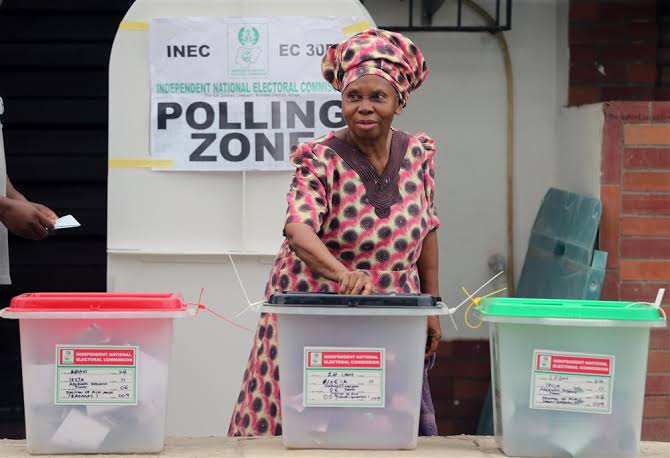
INEC had issued the official notice of the election since February 26, 2025 and party primaries have been conducted since June 2025. Campaigns opened on September 24, 2025, and will close at midnight on February 19, 2026. The Commission will deploy the Bimodal Voter Accreditation System (BVAS) across all polling units.


The FCT has historically demonstrated competitive multiparty politics. No single party has ever secured all six councils in one election cycle. In 2022, the All Progressives Congress (APC) and the People’s Democratic Party (PDP) split the six chairmanship seats evenly. The 2026 election is widely seen as an early indicator ahead of the 2027 general elections, with major parties mobilising high-level campaign structures and consolidating grassroots alliances.
Historical Voter Turnout Analysis
FCT Area Council elections have historically recorded low turnout. In 2022, average participation was approximately 9%, with some wards such as Gwarinpa in AMAC recording turnout as low as 1.2–1.3%. In 2019, turnout stood at 19.7% in Bwari and 11.5% in AMAC. This mirrors a national decline in voter engagement, which fell from 69.1% in 2003 to 26.7% in the 2023 general elections. Analysts cite voter apathy, limited perceived impact of local councils, and security concerns in some rural wards as contributing factors.


For the 2026 election cycle, INEC has cleared 1,680,315 registered voters for participation, an increase of over 110,000 compared to 2023. Voting will take place in 2,822 polling units across the six councils. A total of 637 candidates from 17 political parties are contesting the 68 available seats. During the recent Continuous Voter Registration exercise, 106,099 newly registered voters collected their Permanent Voter Cards.


Polling units are scheduled to open at 8:30 AM. INEC has deployed 1,132 vehicles, 620 motorcycles, and 14 boats for election logistics. Results will be uploaded to the IReV portal after manual counting and signing at polling units.
The FCT Police Command has announced a restriction of movement from 6:00 AM to 6:00 PM on election day. A joint security deployment involving the Police, Army, Navy, Air Force, and DSS will cover polling units and collation centres. INEC has mandated the Economic and Financial Crimes Commission (EFCC) and the Independent Corrupt Practices and Other Related Offences Commission (ICPC) to deploy personnel to deter and prosecute vote buying.
Youth and Women Representation
Ahead of the election, BrainBuilders Youth Development Initiative, through its YVote Naija platform, conducted a review of candidate lists across the six Area Councils. Their findings suggest a two-tier political structure: youth participation is expanding at the ward level, while executive authority remains concentrated among older political actors. Women remain significantly underrepresented across both executive and legislative contests.


Female representation on executive tickets varies significantly across councils. Abaji records 28.6%, while AMAC stands at 15.6%. Representation drops sharply in Bwari (9.1%), Gwagwalada (4.5%), Kuje (13.6%), and Kwali (5.6%). No woman is contesting for Chairmanship in Bwari, Gwagwalada, or Kwali. Women are predominantly fielded for Vice-Chairmanship rather than top executive positions. Only Abaji and AMAC feature more than one woman on executive tickets.
Youth representation in chairmanship and vice-chairmanship tickets shows modest inclusion. Abaji records 28.6%, AMAC 12.5%, Bwari 18.2%, Gwagwalada 9.1%, Kuje 18.2%, and Kwali 22.2%. Only Abaji crosses the 25% youth threshold. Gwagwalada records the lowest youth executive inclusion.
Female participation in ward contests remains limited. Abaji records 4.3%, AMAC approximately 7%, Bwari about 15%, Gwagwalada about 5%, Kuje roughly 10%, and Kwali around 7%. Even in Bwari, the strongest performer, women constitute roughly one in seven candidates. Data also indicates that women are more frequently fielded by smaller opposition parties rather than dominant political parties.
Youth dominate ward-level contests. Estimates indicate that 60% of youth representation is in Abaji, over 50% in AMAC, 45–50% in Bwari, above 55% in Gwagwalada and Kuje, and over 60% in Kwali. This reflects a structural pattern that shows how youth are encouraged to contest councillorship positions but are significantly underrepresented in executive leadership roles.
Debunking Key Misinformation and Disinformation Ahead of the Election
Authorities and civil society organisations have identified multiple instances of misinformation and disinformation intended to undermine the electoral process as the FCT elections scheduled for Saturday, February 21, 2026, approach. INEC has addressed several of these misleading claims circulating ahead of the poll. Here is a snapshot of some of the claims:
- Result Transmission Controversy: INEC had to debunk widespread false reports that results would be transmitted “in real time” as votes are cast. The commission clarified that results are uploaded to the IReV portal only after voting, manual counting, and signing by party agents at the polling units.
- Labour Party (LP) Exclusion Claims: There have been claims that INEC “unjustly” excluded LP candidates. INEC and the courts have clarified that the omission was due to internal party leadership disputes and the expiration of their national executive committee’s tenure, which led to a failure to meet legal nomination deadlines.
- Fake Election Timetables: In early 2026, fake public notices surfaced on social media detailing incorrect dates and “proposed” schedules for upcoming polls. Authorities warned the public to disregard any timetable not published on the official INEC website.
Addressing the Media
In the remarks of the INEC Chairman, Prof. Joash Amupitan, SAN, at the first regular consultative meeting with media executives held at the inec conference room, Abuja, on Wednesday, 4th February 2026, INEC urged voters to disregard doctored videos and unverified reports and to rely solely on official communication channels and the IReV portal for verified updates.
He assured the commission commitment to openness and accountability, “as we navigate this period of intense electoral activity (from the FCT Area Council polls on February 21, 2026, to the upcoming governorship contests in Ekiti and Osun), the Commission remains committed to openness and accountability,” he said.
The nation’s electoral system, despite its inherent strengths, remains vulnerable to concerted efforts of misinformation, misinterpretation, deliberate distortion, and Foreign Information Manipulation & Interference (FIMI), the electoral commission chairman warned.
In a strong call to action directed at media professionals, the commission urged all outlets to “promote accurate reporting at all times.” It emphasised that its official website and all digital channels are the most “veritable and authoritative points of contact” for journalists seeking reliable information. Furthermore, the commission stated that only authorised officials would continue to speak on its behalf.
The remark concluded with a powerful reminder that “elections are no longer just contested only at the polling units, they are contested in the information space.” Media organisations were, therefore, implored to “rise against mis/disinformation to protect the sanctity of our electoral process.”
Conclusion
The FCT Area Council election of February 21, 2026, is not just a local election, but it will determine how people govern at the grassroots level and create a political pointer of the national political trends before the 2027 general elections. Although the deployment of technical changes and massive security operations is meant to increase credibility, structural problems, especially when it comes to youth executive access and inclusion of women in the political arena, are still paramount. The standard of the participation, transparency, and representation attained in this cycle will go a long way in influencing the larger discourse concerning the democratic maturity in Nigeria.
FactCheckAfrica will be monitoring the election closely and urges citizens to verify all information before sharing any news. This can be done conveniently using the Myaifactchecker (https://myaifactchecker.org/) platform.