BY: Mustapha Lawal
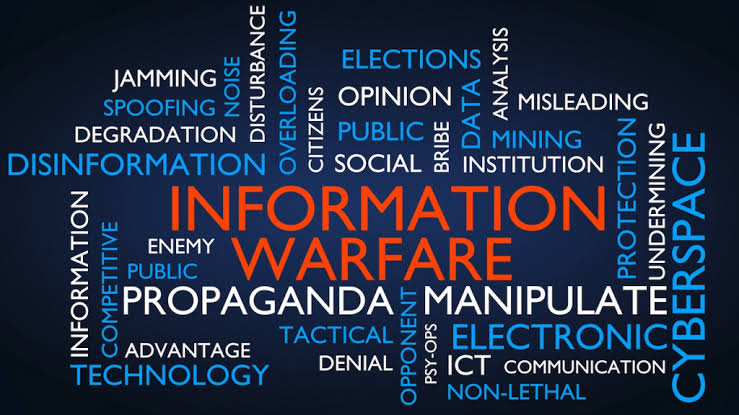
Nigeria’s democratic crisis in the age of artificial intelligence will not be solved by fact-checks alone. While verification remains essential, it is increasingly clear that the scale, speed, and sophistication of AI-driven misinformation demand structural intervention. Left unregulated, digital platforms and generative AI systems are quietly reshaping Nigeria’s electoral and civic space, without accountability, transparency, or consequence.
This is no longer a hypothetical threat. AI-assisted disinformation is already distorting public debate, weakening trust in electoral institutions, and blurring the boundary between truth and fabrication. The question before Nigeria is not whether regulation is necessary, but whether it will arrive before the next major democratic rupture.
Platform Accountability Must Be Mandatory, Not Voluntary
Technology companies operating in Nigeria currently enjoy an extraordinary privilege: they shape political discourse without being legally required to explain how. Content moderation policies are opaque, enforcement is inconsistent, and algorithmic amplification remains a black box.
Nigeria should mandate platform transparency obligations during election periods, including: Disclosure of political content ranking criteria, clear labeling of AI-generated or materially altered political media, and public reporting on coordinated inauthentic behaviour detected and removed in Nigeria.
Voluntary commitments have failed globally. Without legal backing, platforms respond primarily to reputational pressure, not democratic risk. Electoral integrity should not depend on corporate goodwill.
AI-Generated Political Content Requires Clear Disclosure
One of the most urgent reforms is the mandatory disclosure of AI-generated political content. This does not mean banning generative tools outright, but it does mean requiring clear, persistent labeling for synthetic or significantly edited media related to elections, governance, or public office holders.
Nigeria’s information environment is uniquely vulnerable due to low trust in institutions and high reliance on social media as a primary news source. Undisclosed AI-generated content exploits this vulnerability. Failure to label political deepfakes, synthetic audio, or AI-generated opinion pieces is not innovation, it is deception.
Electoral Law Must Catch Up With Digital Reality
Nigeria’s electoral framework remains largely analogue in a digital age. The Electoral Act does not meaningfully address algorithmic manipulation, synthetic media, or coordinated disinformation networks.
Reform should include: Explicit recognition of AI-driven misinformation as an electoral offence, Clear penalties for actors who deploy synthetic content to mislead voters, Emergency takedown protocols for demonstrably false election-related media. Also crucial is that enforcement must target coordinators and financiers, not just individual users. Disinformation campaigns are rarely spontaneous; they are organised, funded, and strategically deployed.
Independent Oversight Is Essential
Any regulatory response must avoid becoming a tool for censorship or political suppression. This is where Nigeria has repeatedly failed, confusing regulation with control. An independent, multi-stakeholder digital oversight body, separate from executive influence, should be empowered to: Audit platform compliance during elections, Review takedown decisions involving political speech, and publish public-interest transparency reports. Without independence, regulation risks deepening mistrust rather than restoring confidence.
Invest in Defensive AI, Not Just Surveillance
Nigeria must also invest in public-interest AI infrastructure, tools that empower citizens, journalists, and civil society to interrogate information, not merely consume it. Fact-checking technologies, forensic media analysis, and verification tools should be treated as democratic infrastructure, not niche innovations. Supporting initiatives like MyAIFactChecker is not optional; it is strategic. A population equipped to question digital content is far harder to manipulate than one policed from above.
The Cost of Inaction Is Democratic Collapse
Some argue that regulation will stifle innovation or free expression. But the absence of guardrails has already produced a more dangerous outcome: a collapsing shared reality. When citizens cannot agree on basic facts, who said what, who won what, or what actually happened, democracy becomes impossible.
AI is not neutral in fragile democracies. Without intervention, it will continue to reward outrage, falsehood, and division, because those are the signals algorithms optimise for. Nigeria stands at a crossroads. It can either shape the rules governing AI and digital platforms now, or allow those systems to shape its democracy unchecked. History suggests the latter path ends badly. The time to regulate the algorithm is before it finishes regulating us.
EDITOR’S NOTE: This article is part of FactCheckAfrica series examining the growing harms of artificial intelligence (AI) across Africa, with a particular focus on Nigeria. As AI systems increasingly shape elections, employment, security, and public discourse, this series interrogates who benefits, who is harmed, and who is held accountable when technology outpaces governance.