FACT-CHECK: No, the Nigeria-US Health Deal Does Not Stop NAFDAC from Testing Drugs or Vaccines. But What More?

BY: Abdullateef Sebiotimo
Claim:
Nigeria signed a medical aid agreement with the United States. Under it, America will give Nigeria free vaccines and drugs worth about $3 billion to fight malaria and other diseases while Nigeria will put in $2.1 billion as its own contribution. One condition is that NAFDAC must not check or test those vaccines and drugs. Ghana and some other African countries rejected the same kind of deal, but Nigeria accepted it.
Verdict:
False.
Full-Text:
On 20–21 October 2026, posts circulating on X claimed Nigeria had signed a medical aid deal with the US containing a clause that prevents NAFDAC from reviewing or testing the supplied vaccines and drugs.
One widely shared version by a verified account, Dr. Tad (@PThaddeous), claimed, “The Nigeria Government has signed a medical aid agreement with the United States of America. The US will supply free vaccines and drugs worth $3 billion to Nigeria in aid to tackle malaria and other threatening ailments. Nigeria Government will provide $2.1 billion as a counterpart fund. The condition from the USA is that NAFDAC must not review the vaccines and drugs. That is, NAFDAC should never attempt to test vaccines and drugs. And the Government of Nigeria under Ahmed Tinubu signed it. Ghana rejected it…”
As at the time of this review, the post has garnered 28.9K views, 469 retweets, 410 likes and 148 bookmarks
A related post by NG/Lagos Reports (@TrafficChiefNG) on 21 October 2026 stated, “The Nigeria Government has signed a medical aid agreement with the United States of America. The condition from the USA is that NAFDAC must not review the vaccines and drugs. That is, NAFDAC should never attempt to test the vaccines and drugs. If you no get money, NO SICK OH!”
Similar phrasing appeared across multiple accounts in the same period, often linking the claim to population concerns or comparisons with Ghana’s rejection of a separate, smaller proposal. Earlier versions of related claims about the broader deal had circulated since late September 2026.
Because the claim, if accepted as true, could fuel distrust in essential medicines, discourage uptake of needed treatments, or create unnecessary panic about public health programmes made FactCheckAfrica verify the claim.
Verification:
The core claim is that the agreement stops NAFDAC from testing the drugs and vaccines. NAFDAC addressed this in a public statement around 20 October 2026. The Director-General of NAFDAC, Prof. Mojisola Christianah Adeyeye made it clear that the agency still holds its full legal power to protect Nigerians as seen here, here and here.
The MoU refers to an existing working arrangement between NAFDAC and the US Food and Drug Administration. Under that arrangement, medicines and vaccines made in the United States and already approved by the American regulator can get “faster clearance” in Nigeria. This is because the US approval process is known to be strict. It does not mean NAFDAC steps aside.
NAFDAC still has the right to examine applications, inspect factories and products, carry out laboratory tests based on risk, release vaccine batches when needed, and monitor products after they reach the market. Any products that are not manufactured in the United States will go through NAFDAC’s normal checks for quality, safety and efficacy. The agency also said it will use its tracking system to follow how the supplies move once they enter the country.
These points from NAFDAC itself show that the absolute ban described in the posts does not exist.
What the Deal Is About
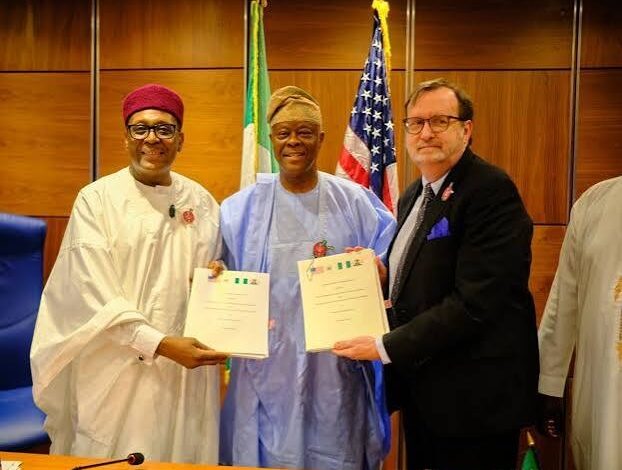
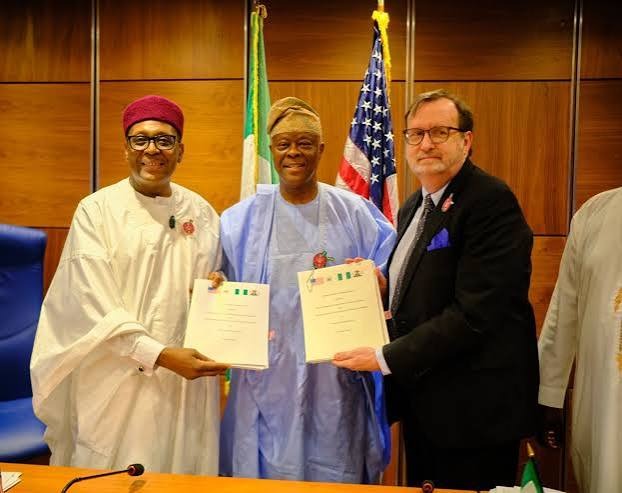
On 19 December 2025, Nigeria and the United States signed a technical Memorandum of Understanding in Abuja. The agreement covers the period from April 2026 to the end of 2030.
The United States plans to provide nearly $2.1 billion in grant money. Nigeria has promised to put at least 6 percent of the money it actually spends each year from federal and state budgets into health. That Nigerian commitment is expected to add up to about $3 billion over the five years. The Nigerian money stays in Nigeria and is meant for the country’s own priorities.
The cooperation focuses on better detection and control of HIV, tuberculosis and malaria; stronger disease surveillance so outbreaks can be caught early; improved laboratories and safe handling of samples; support for health workers on the front line; better data systems; and more reliable supplies of essential medicines.
There is also a separate agreement, signed the same day, that allows both countries to share samples and genetic information about new or dangerous diseases quickly, so diagnostics and treatments can be developed faster when needed.
An MoU of this kind is a statement of intent, but the money still has to be approved year by year in both countries’ budgets. It does not mean that the grant has already been disbursed to Nigeria.
What Nigeria Stands to Gain
The most obvious benefit is the size of the planned support. $2.1 billion from the United States over five years is a large sum by the standards of health aid Nigeria has received in recent years. It can help keep treatment programmes for HIV, TB and malaria running at a time when earlier forms of American support have been reduced.
Beyond the money for medicines, the deal includes investment in laboratories, surveillance systems and primary health care. These are the parts of the health system that decide whether an outbreak is stopped in one local government area or spreads across states. If the funds are used well and channelled through Nigerian institutions rather than parallel projects, the country’s own agencies could come out stronger at the end of the five years.
There is also a built-in shift: American support is meant to reduce over time while Nigerian government spending rises. If that transition actually happens, Nigeria would be less dependent on external money for basic health services. For patients, the arrangement can mean faster access to certain quality-checked products from the United States because NAFDAC already has a working relationship with the American regulator.
Possible Negatives and Open Questions
Several points still need clear answers. The full text of the MoU has not been placed in the public domain in a way that ordinary citizens can easily read every clause. Without that, it is hard to know exactly what was agreed on data sharing, how samples will be used, or what happens if either side wants to end the arrangement.
The specimen-sharing part has drawn particular attention. Once samples leave Nigeria, questions arise about who keeps the information, whether Nigeria will benefit if new medicines are developed from those samples, and how long the data remains available to the other side.
On the funds side, Nigeria’s promise to spend at least 6 percent of executed budgets on health is ambitious. Past experience shows that budget announcements do not always turn into actual spending. If the domestic contribution falls short while American support declines, gaps could appear in services.
Implementation is another practical risk. For years, a large share of American health money moved through international organisations and local partners rather than core government systems. Moving to a new model quickly, without the old support structures, can create bottlenecks or leave programmes under-managed.
These are real issues that deserve open discussion and closer public scrutiny.
The Ghana comparison
Many of the posts said Ghana rejected “the same deal.” That is not accurate. Ghana turned down a different and much smaller proposal, reported to be in the region of $109 million. Ghanaian officials explained that the document asked for access to the country’s pathogen information and medical records, required Ghana to put up its own money, and contained language they believed would stop the Ghana Food and Drugs Authority from inspecting the medicines that came in under the programme. The cabinet rejected it quickly.
The Nigerian agreement is larger, covers a broader set of activities, and was negotiated separately. Using Ghana’s decision as proof that Nigeria accepted a dangerous no-testing clause mixes two different documents and leads to the wrong conclusion.
Conclusion:
Nigeria did sign a health cooperation agreement with the United States in December 2025. It involves real planned funding from both sides and aims to support disease control, laboratories, surveillance and primary care for five years. The deal carries opportunities for better services and a gradual move toward higher domestic financing. It also raises legitimate questions about transparency, data and sample sharing, and whether the money will strengthen Nigerian institutions.
What the viral posts got wrong is the central claim that NAFDAC is barred from testing the drugs and vaccines. Official statements from the regulator show that the agency keeps its full authority. Products made outside the United States will be tested in the normal way, and even US-made products remain under NAFDAC’s oversight. The Ghana story refers to a different proposal.