BY: Sultan Usman & Mustapha Lawal
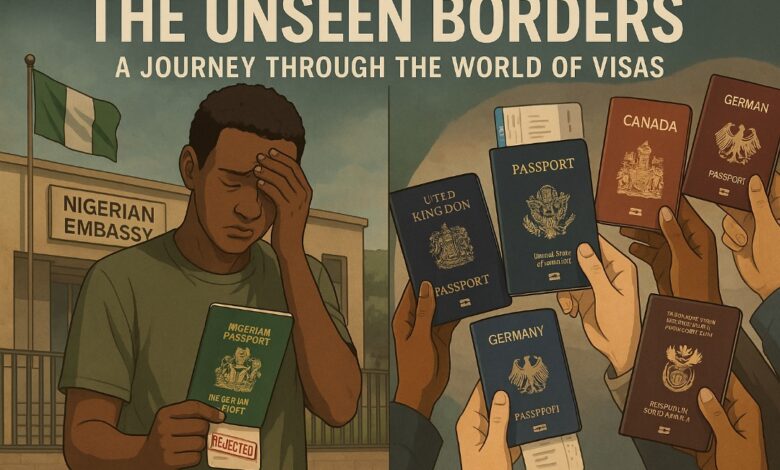
In July 2025, the United States altered its visa policy for Nigerians. What used to be five-year, multiple-entry visas were reduced to just three-month, single-entry permits. The announcement, though phrased as a “reciprocity alignment“, sent a clear message: mobility is a privilege, not a right, and it can be retracted without warning.
For thousands of Nigerians, students, businessmen, and visiting families, this wasn’t just an administrative update. It was a reminder that global mobility remains deeply political, and the power of a passport is never guaranteed. When Nigeria’s Ministry of Foreign Affairs responded to the U.S. visa change, spokesperson Kimiebi Ebienfa urged Washington to reconsider, arguing that the new three‑month single‑entry rule is “misaligned with the principles of reciprocity, equity and mutual respect that should guide bilateral engagements between friendly nations
Around the world, the rules of travel are shifting. Technology is replacing paper. Borders are becoming invisible yet harder to cross. Countries like the UK are moving entirely to e-visas. The European Union’s ETIAS system will soon require pre-approval even for travellers from visa-free nations. Biometrics are replacing stamps, and AI is learning how to detect overstays, fraud, and risky travel patterns in real-time. The future looks sleek, digital, and efficient, but not necessarily more equal.
Africa’s Internal Unlocking
For African travellers, and Nigerians in particular, the road remains steep. The Henley Passport Index still places Nigeria far down the list, offering visa-free or visa-on-arrival access to fewer than 50 countries, mostly in West Africa and the Caribbean. This lopsided access isn’t due to accident or oversight.
As the Hausa say, “Ruwa baya tsami banza”, meaning “water doesn’t turn sour without cause.” Visa restrictions are deliberate, often shaped by historical distrust, economic concerns, and security profiling. A Nigerian applicant is still more likely to be denied a visa than a German, even with identical paperwork.
READ ALSO: Part V: The Unseen Borders, A Journey Through the World of Visas: The Politics of Borders
Migration scholar Mehari Taddele Maru (European University Institute & Johns Hopkins) highlights how deep structural biases persist in visa regimes: “In 2014, 18 % of African visa applications were rejected, while the global rate was 5 %. By 2022, African rejection had risen to 30 %… Two key factors, income and passport power, explains why African applicants face higher Schengen visa rejection rates.” This underscores that even as digital and biometric systems take over, they frequently reinforce systemic inequities, meaning good documentation is not always enough; structural bias remains at play.
Yet even as the walls seem to rise, cracks are forming. Within Africa, momentum is building. Countries like Kenya, Rwanda, and Ghana have relaxed visa rules for fellow Africans. The African Union passport, though slow in implementation, holds promise as a Schengen-style solution for the continent. Regional e-visa platforms are being tested. There’s growing recognition that intra-African mobility is critical, not just for trade, but for dignity.
Dr Khabele Matlosa, Director for Political Affairs at the African Union, emphasises the continent-level risks and rewards in easing borders: “We have a problem now that young people are risking their lives… If we open opportunities in Africa, we reduce that risk. He frames visa liberalization not only as an economic tool but also as a humanitarian imperative, suggesting that smarter visa and passport policies can help stem irregular migration and grow intra-African trade.
The Rise of the Digital Nomad and Digital Disparity
Globally, a new category of traveller is emerging: the remote worker, the digital nomad. Countries like Portugal, Barbados, and Estonia now offer digital nomad visas, allowing professionals to live abroad without traditional sponsorship. For those with the right skills and internet access, mobility is expanding. But even this new freedom is uneven. Most of these visas still favour citizens of wealthier nations. For a Nigerian applicant, the bar is often set higher, with more documentation, higher income thresholds, and a background check shaped by global algorithms.
The shift toward digital border control introduces new complexities. While e-visas and biometric checks reduce fraud and speed up processing, they also leave less room for discretion. An overstayed visa from five years ago can now trigger automatic red flags in multiple countries. A single mistake becomes a permanent stain. Fake documents, forged letters, and insider embassy connections are becoming obsolete. In the new visa economy, a clean digital travel history is worth more than charm, luck, or lineage.
The Journey Is Political: Hope in Strategy, Not Sympathy
The idea of “passport privilege” has never been more visible. The most powerful passports unlock the world with minimal friction, while the weakest trap their holders in a cycle of rejections, delays, and suspicion.
Visa policies have become tools of foreign policy. The UAE suspended visas for Nigerians over diplomatic disputes. Russia and the West exchange travel bans like chess pieces. China restricts visas for foreign journalists from “unfriendly” countries. In the geopolitical game, passports are pawns. Will the world ever move toward true visa equality? Unlikely, at least in the near term. But change is coming, not through goodwill, but through strategy.
More African nations are negotiating visa waivers through trade deals and cultural exchanges. Tech is creating alternative pathways, remote work permits, student mobility platforms, and digital credentials. Some countries are offering citizenship by investment. Second passports are becoming insurance policies for the globally ambitious.
Conclusion: Lessons for the Modern Traveller
In this evolving landscape, the wise traveller is not the one who waits but the one who prepares. Stay updated on visa systems. Keep a clean travel record. Explore legal avenues for second citizenship. Adapt to technology; learn how to use e-visas, biometric checks, and AI-screened forms to your advantage. Visa systems may be unfair, but they’re not immutable.
Will Nigeria ever enjoy the passport power of Germany or Japan? Perhaps not tomorrow, or even in a decade. But as the saying goes, “Even the snail, if persistent, will reach its destination.” The journey toward mobility is slow, winding, and deeply political. But it is not hopeless. With strategic policy, stronger economies, and smarter diplomacy, doors can open. Borders may be drawn on maps, but their weight is felt in embassies, airports, and online forms. The future of travel belongs not to the privileged, but to the prepared.