Lagos Hosts Final Leg of AI Fundamentals Workshop to Strengthen Digital Literacy and Media Accountability

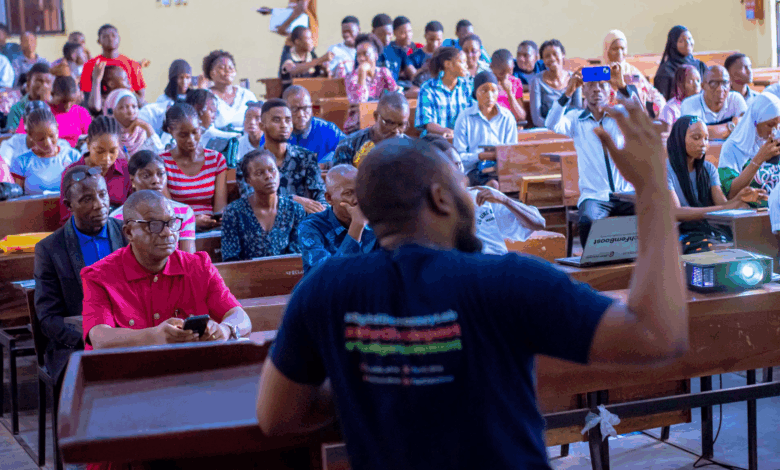
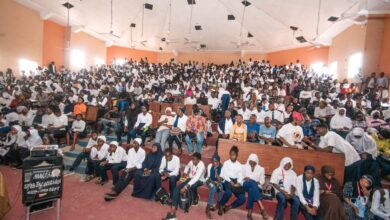
The Lagos State University (LASU), Ojo, played host to the final edition of the Artificial Intelligence Fundamentals Workshop, a regional capacity-building initiative aimed at equipping young Nigerians with practical digital and media literacy skills.
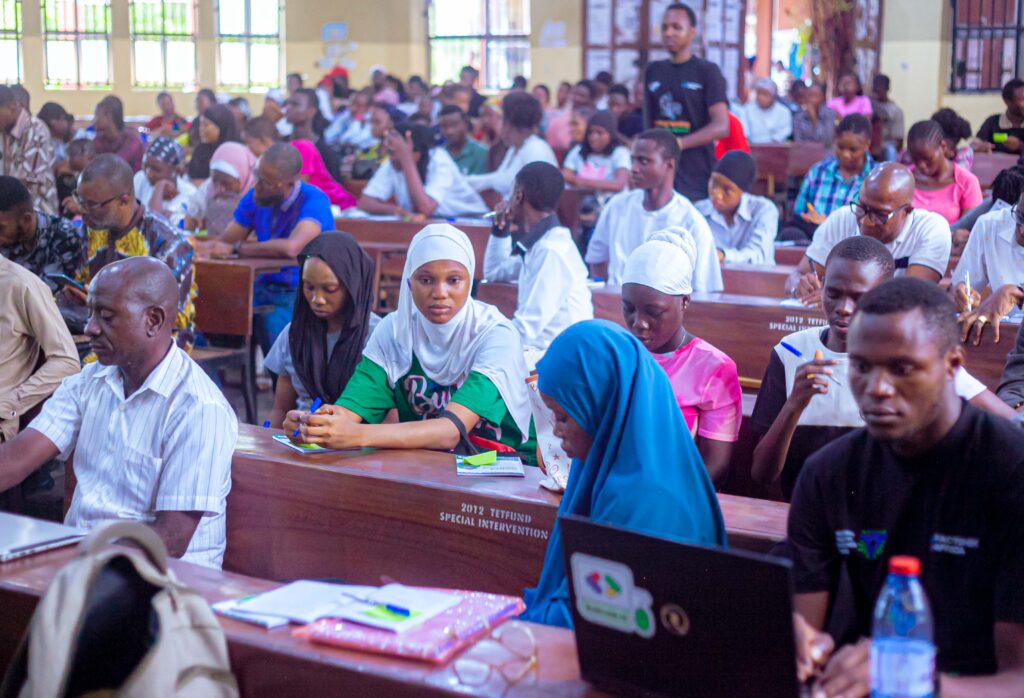
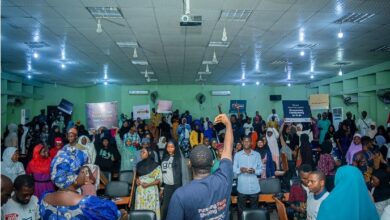
Held at the 3-in-1 Lecture Theatre, Faculty of Education, the workshop brought together students, journalists, and civic actors for a full day of intensive learning focused on artificial intelligence, fact-checking, and media accountability.
Organised under the Digital Democracy Lab project and supported by the Nigeria Youth Futures Fund (NYFF), the workshop marks the culmination of a regional tour that has covered Oyo, Osun, Ekiti, Ondo, and Ogun States.
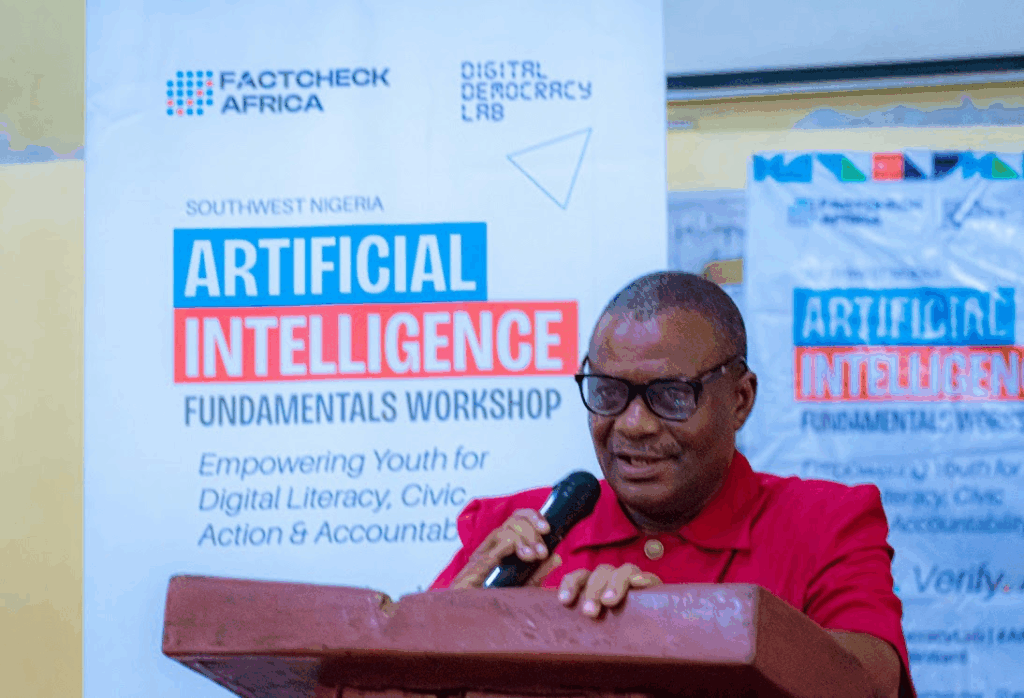
Delivering the keynote address, the Dean of the Faculty of Communication and Media Studies, Lagos State University, Prof. Jide Jimoh, emphasised the growing importance of artificial intelligence in combating misinformation and strengthening democratic accountability. He noted that while AI presents new challenges, it also offers powerful tools for verification and responsible journalism.
Participants were introduced to practical AI applications in media practice, including fact-checking platforms such as MyAIFactChecker. The tool is designed to assist journalists and the public in verifying claims, particularly during critical events.
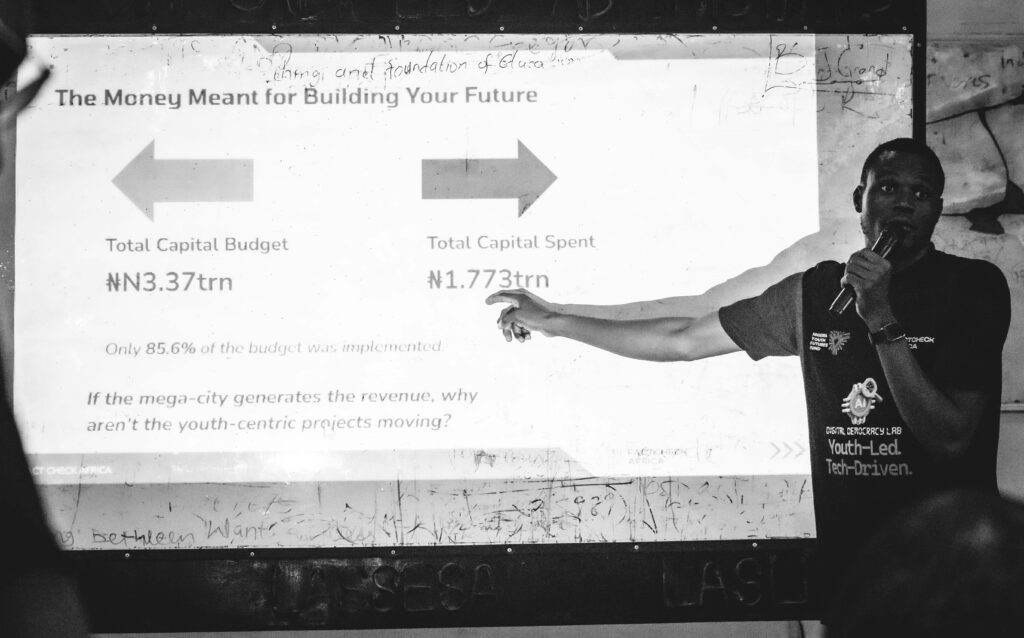
A major highlight of the workshop was the hands-on training session facilitated by Lukman Adeoti, titled “Hands-On with AI Tools: Tracking Government Spending and Demanding Accountability.” The session moved beyond general digital investigation, equipping participants with practical skills to use AI for fiscal oversight, fact-checking, and journalism. Using the Lagos State budget as a case study, participants were guided through real-world verification workflows and digital investigation techniques, strengthening their capacity to track public spending and hold institutions accountable.
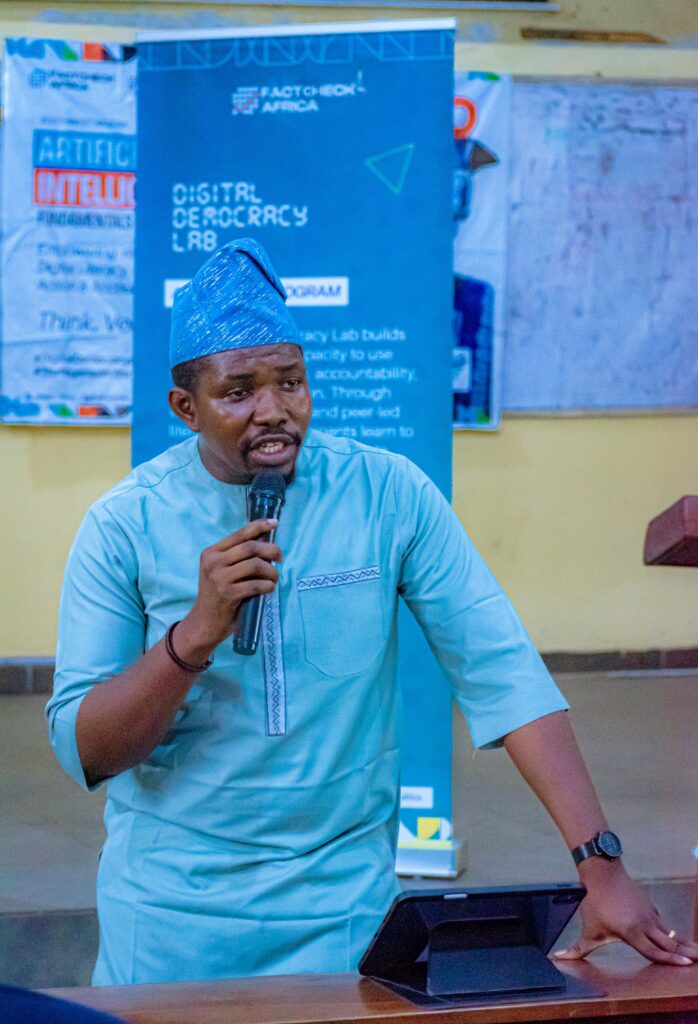
Further sessions explored the broader implications of AI in governance and civic engagement. In his presentation, Dr Olasunkanmi Arowolo examined AI-driven approaches to media accountability, highlighting tools such as AI-powered audio monitoring systems and data analysis platforms that enhance investigative reporting and transparency. He stressed the need for responsible AI use, noting that while the technology can strengthen democratic processes, it also introduces risks such as misinformation, algorithmic bias, and lack of transparency .
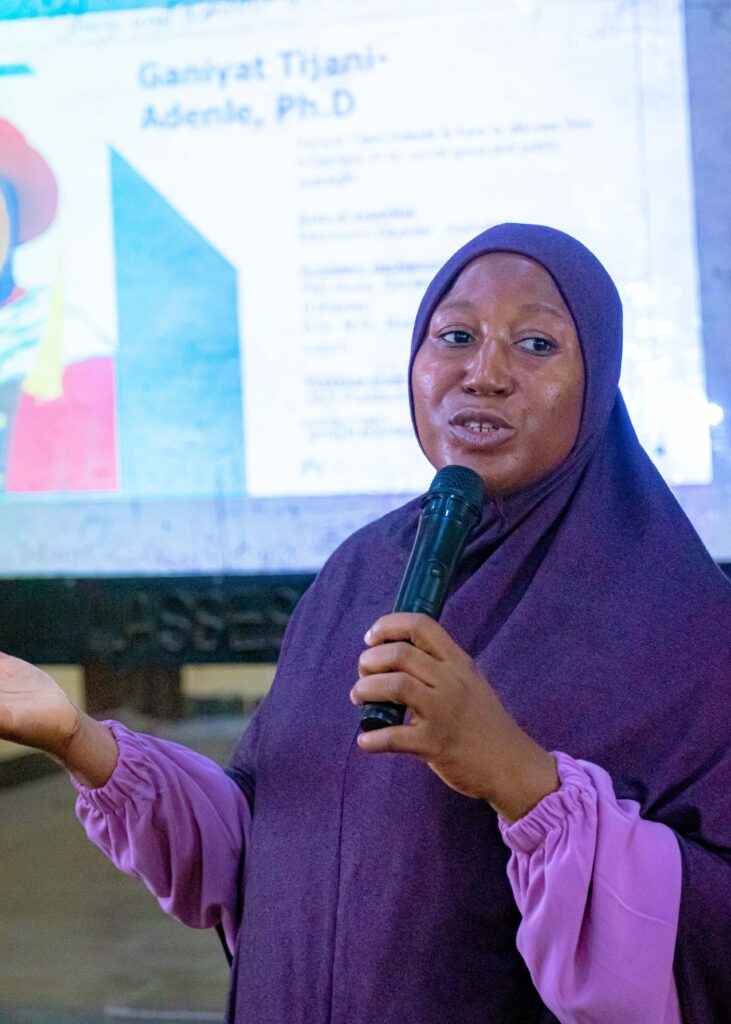
Similarly, Dr Ganiyat Tijani-Adenle addressed the role of artificial intelligence in promoting social good and public oversight. She underscored the dual nature of AI as both a tool for innovation and a potential driver of information disorder if not properly managed, urging participants to adopt ethical practices in deploying digital technologies .
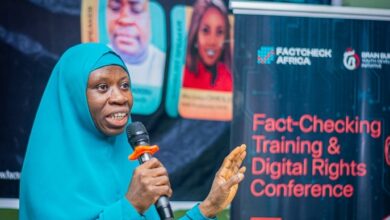
The workshop also featured a showcase of FactCheckAfrica’s initiatives, highlighting ongoing efforts to promote digital literacy, counter misinformation, and strengthen civic engagement across Nigeria.
Speaking on the impact of the programme, organisers noted that the workshop series has gone beyond theoretical engagement, fostering the creation of participant-led accountability clusters that monitor public projects and government spending at the community level.
With a target of reaching 1,000 participants across six South-West states, the Lagos edition not only concludes the regional circuit but also reinforces the importance of equipping young people with the skills needed to navigate an increasingly complex information environment.
The event ended with participant feedback, certificate presentations, and a renewed call for collaboration among youth, media professionals, and civic actors in promoting responsible AI use and strengthening democratic accountability.