BY: Mustapha Lawal
Nigeria has confirmed a case of Ebola Bundibugyo virus disease in the Federal Capital Territory (FCT), Abuja, prompting contact tracing and renewed attention to the country’s preparedness for infectious disease outbreaks.
The Federal Ministry of Health and Social Welfare announced the case on 20 October 2026 after laboratory testing confirmed the infection in a woman who had recently travelled to Nigeria. Authorities reported identifying 44 close contacts and said the patient was receiving medical care in isolation.
The World Health Organization (WHO) says the patient’s symptoms began on 7 October, she sought care at a private health facility in Abuja on 11 October, and laboratory testing confirmed the infection on 20 October.
The case has raised questions about where the woman contracted the virus, whether other people have been infected, and how prepared Nigeria is to contain further transmission.
Here is what the available evidence establishes, what we know about the origin, the virus and the response..
What has Nigeria confirmed?
In a statement published on 20 October 2026, the Federal Ministry of Health and Social Welfare confirmed one laboratory-confirmed case of Ebola disease in the FCT.
The ministry said the patient was a woman who had recently arrived in Nigeria on an international flight from Uganda. She had received care at a private hospital in Abuja before the diagnosis was confirmed and was subsequently isolated for medical care.
The ministry also reported that 44 close contacts had been identified. These included people potentially exposed to the patient, such as healthcare workers, patients, caregivers and travel contacts.
The WHO confirmed the reported case and said investigations were continuing to establish the likely source of infection and reconstruct the patient’s travel and exposure history.
At the time of the initial announcement, the authorities had confirmed one case and identified 44 contacts. These are distinct categories: the number of contacts does not represent the number of confirmed infections.
Sources: Federal Ministry of Health and Social Welfare; WHO Regional Office for Africa.
Where did the patient contract the virus?
The patient’s travel history is an important part of the investigation, but it does not by itself establish where she became infected.
The Federal Ministry of Health said she had recently arrived in Nigeria from Uganda. Reuters subsequently reported that she had travelled to the Democratic Republic of the Congo (DRC) before travelling through Uganda and onward to Nigeria.
The WHO said investigators were still working to establish the likely source of infection.
The distinction matters because a country through which someone travels is not necessarily the country where that person contracted a disease. Establishing the likely source requires investigators to examine the timing of travel, the onset of symptoms, potential exposures and other epidemiological evidence.
The DRC has been experiencing an outbreak of Bundibugyo virus disease, declared on 15 May 2026. The WHO described Nigeria as the fifth country to detect the virus since that outbreak was declared.
However, the available information does not establish the exact location where this patient was infected. Until health authorities release further evidence, it is more accurate to describe her as having a travel history involving Uganda, with reports also indicating prior travel to the DRC, than to state definitively that she contracted the virus in either country.
Sources: WHO Regional Office for Africa; Reuters.
What is Ebola Bundibugyo virus disease?
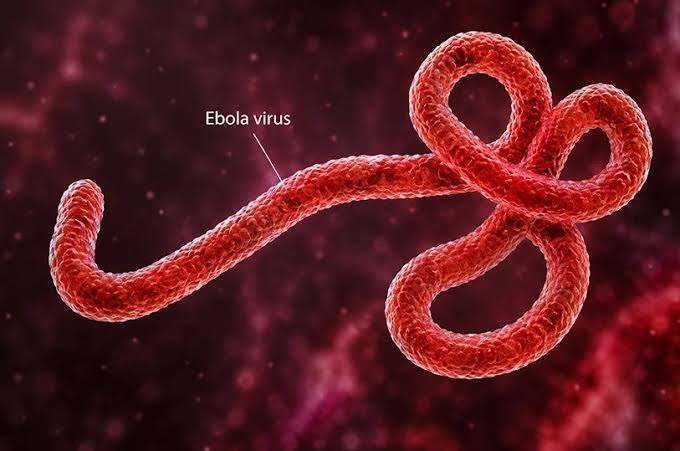
Ebola Bundibugyo virus disease is a severe illness caused by Bundibugyo virus, one of the viruses known to cause Ebola disease in humans.
Although Ebola diseases share some characteristics, the viruses that cause them are not identical. This distinction is important for diagnosis, outbreak response and the use of vaccines or treatments.
Symptoms can include fever, fatigue, muscle pain, headache and sore throat. Other symptoms may include vomiting, diarrhoea, abdominal pain and impaired kidney or liver function. Some patients experience bleeding, but bleeding does not occur in every case.
The early symptoms can resemble malaria, typhoid fever and other illnesses. Symptoms alone cannot confirm or rule out Ebola; diagnosis requires appropriate medical assessment and laboratory testing.
According to WHO guidance, the incubation period for Ebola disease can range from two to 21 days. This is the interval between infection and the onset of symptoms.
WHO says early supportive care, including rehydration and treatment of specific symptoms, can improve survival.
Sources: WHO Ebola disease fact sheet; WHO Ebola vaccine guidance.
Is there a vaccine or specific treatment for the Bundibugyo virus?
This is an important distinction in the current outbreak.
As of its September 2026 guidance, WHO says there is no licensed vaccine specifically for Bundibugyo virus disease. The licensed Ebola vaccine Ervebo is directed at the Ebola virus responsible for Ebola virus disease caused by the Zaire ebolavirus, and it is not a licensed vaccine for Bundibugyo virus disease.
WHO also says there is currently no approved vaccine or specific treatment for Bundibugyo virus disease, although candidate products are being developed. Clinical care remains important, including early supportive treatment and management of complications.
This means it would be inaccurate to assume that a vaccine used against one Ebola virus will necessarily protect against every other virus that causes Ebola disease.
The absence of a licensed Bundibugyo vaccine does not mean that nothing can be done. Isolation, infection prevention and control, surveillance, laboratory diagnosis, contact tracing and appropriate clinical care remain central to outbreak management.
Source: WHO, Ebola Disease fact sheet and Ebola Vaccines guidance.
How does Ebola spread?
Ebola spreads primarily through direct contact with the blood or other bodily fluids of a person who is sick with the disease or who has died from it. Transmission can also occur through contact with objects contaminated by infected bodily fluids.
The virus can enter the body through broken skin or mucous membranes, including the eyes, nose and mouth. Healthcare workers may be at risk if they care for patients without appropriate infection-prevention measures.
WHO says people do not transmit Ebola before symptoms develop. People remain infectious while the virus is present in their blood.
Ebola is not generally transmitted through the air in the same way as measles. Being in the same general area as a person does not automatically mean someone has been infected; the nature of the contact and potential exposure are important.
Accurate information about transmission can help reduce unnecessary fear and stigma while directing attention to the precautions that matter.
Source: WHO, Ebola Disease fact sheet.
What does the figure of 44 contacts mean?
The Ministry of Health reported that 44 close contacts had been identified following confirmation of the case on October 20, 2026.
In public health, a contact is someone who may have been exposed to an infected person in circumstances that warrant assessment or monitoring. Depending on the circumstances, contacts may include family members, caregivers, healthcare workers, other patients or people who had relevant interactions with the patient.
Being identified as a contact does not mean that a person has Ebola.
Contact tracing is the process of identifying people who may have been exposed, assessing their potential risk, monitoring them as appropriate and arranging medical assessment if symptoms develop.
The number of contacts can change as investigators obtain more information. Additional people may be identified, while others may complete the required monitoring period.
To understand the situation, it is important to distinguish between confirmed cases, suspected cases, identified contacts and contacts under monitoring. These terms refer to different groups and should not be used interchangeably.
The figure of 44 therefore represents the number of contacts reported by the authorities at the time of their announcement. It should not be reported as 44 confirmed Ebola infections.
For an up-to-date assessment, journalists should check the latest NCDC and Ministry of Health statements rather than assume that the initial figure remains unchanged.
Sources: Federal Ministry of Health and Social Welfare; WHO Regional Office for Africa.
What are Nigerian authorities doing?
The Ministry of Health said the patient had been isolated and that contact tracing and surveillance had begun. It also called on public and private healthcare facilities to remain vigilant, identify and isolate suspected cases promptly, maintain infection-prevention measures and report suspected cases to public health authorities.
These actions are standard components of an Ebola response. Isolation reduces the risk of exposure to others while a patient receives care. Contact tracing helps identify people who may have been exposed, while surveillance helps authorities detect possible additional cases.
Nigeria had also announced preparedness measures before this case was confirmed.
On 6 October 2026, the NCDC said it was monitoring the Bundibugyo outbreak in the DRC and the imported case detected in Kenya. It reported that Nigeria had strengthened preparedness activities, including surveillance, laboratory diagnosis, isolation and referral arrangements, infection prevention and control, contact tracing, and protection for healthcare workers. The agency also reported conducting a national Ebola preparedness tabletop simulation exercise to test response arrangements and identify gaps.
In June 2026, the Presidency announced the establishment of a Presidential Task Force on Ebola Virus Disease Preparedness and Emerging Public Health Threats and said President Bola Tinubu had ordered the immediate release of ₦10 billion for emergency preparedness.
The announcement also outlined measures involving airport screening, referral and isolation arrangements, health declarations and coordination among government agencies.
These announcements provide evidence that preparedness measures were planned and that a simulation exercise was reported. They do not, by themselves, establish how effectively every measure was implemented or how much of the announced funding has been disbursed and spent.
To assess preparedness, further evidence would be needed on funding releases, procurement, staffing, equipment, laboratory capacity, referral arrangements and the implementation of recommendations from the simulation exercise.
Sources: NCDC statement of 6 October 2026; State House announcement of 9 June 2026.
What should the public do?
Members of the public should follow verified updates from the NCDC, the Federal Ministry of Health and the WHO rather than rely on unverified social media claims.
Anyone who believes they may have had a relevant exposure should follow public health advice and contact the appropriate health authority for guidance. People who develop symptoms after a known or suspected exposure should seek medical advice promptly and explain the possible exposure before arriving at a healthcare facility so that appropriate precautions can be arranged.
People should not assume that everyone who has travelled from Uganda or the DRC has Ebola. Travel history can help investigators assess possible exposure, but it is not a diagnosis.
The public should also avoid sharing identifying information about suspected patients or contacts without a legitimate public-interest reason. Such disclosures can expose people to stigma and discourage cooperation with health authorities.
Conclusion
Nigeria’s confirmed case of Ebola Bundibugyo virus disease warrants careful monitoring, transparent communication and an evidence-based public health response.
The initial announcement identified one laboratory-confirmed case and 44 close contacts. The patient had a travel history involving Uganda, while subsequent reporting also described travel to the DRC. Investigations are needed to establish where the infection was acquired.
As the response develops, timely updates from the health authorities will be essential to understanding whether additional cases have emerged, how contact tracing is progressing and what further measures may be needed.
Clear, accurate reporting can help the public understand the risks without fuelling unnecessary panic, stigma or unsupported claims.