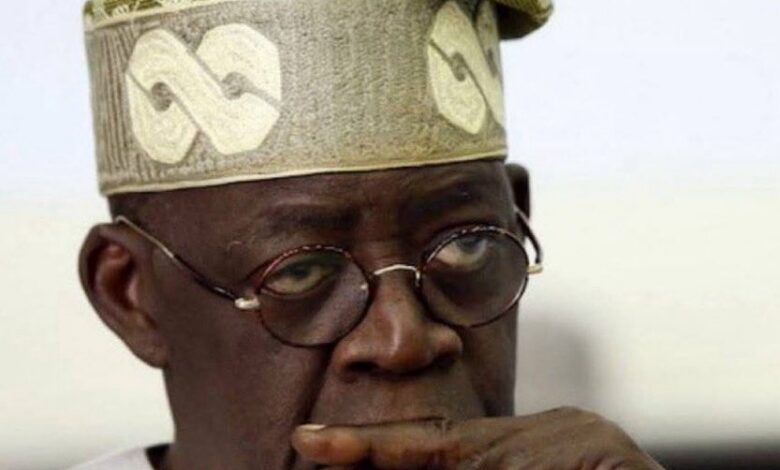
EXPLAINER: Tinubu’s Planned Absence From Some 2027 Campaign Rallies Sparks Opposition Questions About Accountability and His Record — What Are the Facts?

BY: Abayomi Abdulwaliyy Jolayemi
President Bola Ahmed Tinubu’s decision not to attend every campaign rally ahead of the 2027 general election has sparked a political debate over his responsibilities as president, his administration’s record and his approach to seeking re-election.
While Tinubu says he must prioritise governance, Nigeria’s financial obligations and efforts to attract investors, opposition figures have offered different interpretations of his decision. Some have questioned his physical capacity to campaign, while others argue that he is avoiding public scrutiny because of economic hardship, insecurity and what they describe as unfulfilled campaign promises.
The controversy intensified after the inauguration of the All Progressives Congress (APC) Presidential Campaign Council on 14 October 2026. It has since generated reactions from opposition politicians, social media users and APC officials, with the ruling party defending the president’s approach and releasing a proposed campaign timetable that includes rallies in 12 states.
An X post by Emir Sirdam, for instance, argued that if Tinubu was not fit enough to campaign across Nigeria, he was not fit enough to govern the country.
However, not all critics have attributed the president’s decision to health concerns. Some argue that his reluctance to attend every rally raises questions about his administration’s achievements, his willingness to defend his record and the substance of his campaign message.
What exactly did Tinubu say, what have his critics argued, how has the APC responded, and what does the proposed campaign timetable reveal about the controversy?
What did Tinubu say about attending campaign rallies?
Tinubu made the remarks on Wednesday, 14 October 2026, during the inauguration of the APC Presidential Campaign Council at the State House Conference Centre in Abuja.
According to the State House’s official account of the inauguration, the president acknowledged advice from Imo State Governor Hope Uzodimma, chairman of the Progressive Governors Forum, that the demands of campaigning should not distract him from his responsibilities as head of state.
Tinubu said he agreed with the advice, emphasising that governing the country would remain a priority during the election period.
“Nigeria needs more attention now than ever before,” he said, adding that “the responsibility of this office does not pause.”
He subsequently told campaign officials that he would continue to address Nigerians directly while they coordinated activities across states and local government areas.
“So, you will excuse me from going everywhere with you; we have bills to pay. The American creditors cannot wait,” Tinubu said.
The president also referred to the need to attract investors willing to establish businesses and make long-term commitments to Nigeria.
His remarks indicated that he would not attend every campaign engagement. They did not amount to an announcement that he would withdraw entirely from the campaign.
Tinubu’s stated position was that the responsibilities of governing Nigeria would require him to balance official duties with electioneering, leaving campaign officials to coordinate activities in locations he would not personally visit. The controversy, however, has centred on whether this explanation adequately addresses the concerns raised by critics.
Why are critics questioning the decision?
The criticism falls into several broad categories: concerns about the president’s physical capacity, questions about his administration’s record, allegations that he is avoiding public dissatisfaction, and arguments about the responsibilities of an incumbent seeking another term.
The criticism has also come from the campaign organisation associated with Oyo State Governor Seyi Makinde, which accused Tinubu of avoiding public dissatisfaction over his administration’s performance.
In a statement reported by The Punch on 16 October 2026, Richard Ihediwa, the organisation’s Director of Strategic Communications, argued that the president should be prepared to defend his record before Nigerians if he intended to seek another term.
The organisation questioned Tinubu’s explanation that governance responsibilities required him to skip some campaign rallies, citing economic hardship, insecurity and what it described as unfulfilled campaign promises. It also argued that the president should account directly to voters rather than leave party officials to defend his administration.
The organisation further interpreted Tinubu’s reported reference to himself as “Governor Tinubu” during the campaign council inauguration as a sign of alleged disorientation. However, this was the organisation’s interpretation and does not independently establish that the president has a medical condition.
The criticism illustrates that opposition reactions extend beyond speculation about Tinubu’s health. They also concern his administration’s performance, his willingness to face public scrutiny and the substance of his re-election campaign. These allegations should be assessed separately rather than treated as proof of physical unfitness.
These positions overlap in some cases, but they are not identical. Some commentators have interpreted the decision as a possible indication that Tinubu lacks the stamina required for a nationwide presidential campaign. Others have focused on what they regard as the administration’s shortcomings and questioned whether the president is willing to defend his policies before voters.
The distinction is important because criticism of a candidate’s campaign strategy does not necessarily amount to a claim that the candidate is medically unfit.
Critics who question Tinubu’s physical capacity
Some political commentators have interpreted the president’s decision not to attend every rally as a possible indication of health or stamina concerns.
In a report published on 15 October 2026, Daily Mirror Nigeria reported that Kenneth Okonkwo interpreted Tinubu’s decision as an indication that the president was unwell.
Okonkwo called on the president to step down, arguing that he lacked the physical capacity for the demands of a presidential campaign.
Similarly, the presidential campaign organisation associated with Oyo State Governor Seyi Makinde argued that the president’s decision raised questions about his ability to withstand the demands of governing and campaigning.
In its reaction, the organisation said the president should withdraw from the race if fatigue prevented him from campaigning nationwide. It also called for a younger and more energetic president.
The organisation’s statement, published in The Punch’s report of 16 October 2026, described the decision as evidence of what it considered a lack of capacity to lead from the front.
These are the interpretations of the respective critics. The president’s decision not to attend every rally does not, by itself, establish that he has a medical condition or is incapable of performing his official duties.
The argument about accountability and public engagement
Beyond questions about health and performance, critics have also raised concerns about presidential accountability. Campaign rallies provide opportunities for candidates to present their programmes, respond to criticism and engage directly with voters. For an incumbent president, they can also serve as occasions to explain policy decisions and defend the administration’s record.
Critics therefore argue that party officials campaigning on Tinubu’s behalf cannot fully replace the president’s own explanations of his policies and decisions.
The Guardian reported that opposition figures had challenged the president to face voters and account for his administration’s performance.
The report also covered criticism from the Peter Obi movement, which argued that political surrogates could not replace the president’s responsibility to explain his policies and their effects on Nigerians.
The group’s concerns included the cost of food, transportation, electricity and housing.
This argument centres on whether the president’s proposed campaign strategy would provide sufficient opportunities for direct engagement with the electorate.
It does not necessarily imply that he is physically unfit. Rather, it raises a political question about how an incumbent should balance governance with the public accountability expected of a candidate seeking another term.
What have other opposition figures said?
The controversy has also attracted criticism from other political figures. Social Democratic Party politician Adewole Adebayo challenged Tinubu over his willingness to engage voters and defend his administration’s record.
The report also highlighted the argument that the president should personally explain his policies rather than rely exclusively on campaign officials to communicate his achievements.
The common theme in these reactions is that a candidate seeking re-election should be prepared to answer questions about the administration’s record.
However, the reasons given by critics vary. Some have questioned the president’s physical capacity, while others have focused on economic hardship, insecurity, accountability and what they describe as unfulfilled promises.
It would therefore be inaccurate to present all the criticism as a single allegation that Tinubu is unwell.
How has the APC responded?
The APC has defended Tinubu’s decision, arguing that the president can combine governance with a campaign strategy in which party officials coordinate mobilisation across the country.
A report published by Premium Times quoted Obafemi George, a member of the APC Presidential Campaign Council’s media and strategic communications committee, defending the president’s decision not to visit all 36 states.
George said Tinubu had assessed the country’s electoral map and decided that sustaining the gains of his administration was more important than embarking on a nationwide campaign tour.
He also argued that the Constitution does not require a presidential candidate to visit every state during an election campaign.
George defended the administration’s economic policies, citing reforms, investor confidence and social intervention programmes as elements of its record. He argued that party officials and beneficiaries of government programmes could help communicate the administration’s achievements to voters.
The APC’s position is that campaign mobilisation can continue through party officials while Tinubu focuses on governance and attends selected campaign events.
The party’s argument provides a different interpretation of the decision: rather than viewing the president’s absence from some rallies as an indication of weakness or an attempt to avoid scrutiny, it presents the approach as a strategy for balancing official duties with campaigning.
However, the APC’s defence does not independently settle the political arguments about the administration’s performance, nor does it constitute a medical assessment of the president’s fitness.
Is Tinubu withdrawing from the campaign entirely?
No. The available reporting indicates that Tinubu intends to attend selected campaign rallies rather than withdraw from the campaign altogether. TheCable reported that the APC’s campaign timetable listed Tinubu for rallies in 12 states.
The proposed schedule includes a campaign flag-off in Kaduna on 24 October, followed by rallies in Rivers, Plateau, Oyo, Borno, Enugu, Bauchi, Sokoto, Delta, Kano and Adamawa states, before a proposed grand finale in Lagos on 9 January 2027.
A separate Premium Times report published on 16 October also described the itinerary as a proposed programme covering the six geopolitical zones. The APC said the wider campaign would cover the country through a nationwide mobilisation programme, with party officials coordinating activities in states where Tinubu was not scheduled to attend rallies.
The proposed timetable is important because it clarifies that the president’s remarks concerned attendance at every campaign engagement, not a complete withdrawal from electioneering.
The schedule remains subject to adjustment, and the proposed appearances should not be treated as confirmation that every event will take place as planned.
Nevertheless, it gives the public a clearer picture of the campaign strategy that the APC has defended.
Why does the controversy matter for the 2027 election?
The debate raises questions about presidential accountability, public engagement and the responsibilities of an incumbent seeking another term.
For the APC, allowing campaign officials to coordinate activities across the country may be a practical way to sustain mobilisation while the president attends to government business.
For critics, the president’s absence from some rallies raises questions about whether he will provide sufficient opportunities for Nigerians to question his administration and assess its record.
The disagreement also reflects competing interpretations of what voters should expect from a presidential candidate.
One view is that an incumbent should be allowed to organise a campaign around official responsibilities and delegate some engagements to party representatives. Another is that a president seeking re-election should personally defend the administration’s policies and achievements before the electorate, particularly when the country faces significant economic and security challenges.
Neither position automatically establishes that the president is medically unfit or that his administration has failed. Those questions require separate assessments of evidence. Ultimately, voters can consider the administration’s performance, its handling of economic and security challenges, the implementation of its policies and the president’s plans for another term.
Campaign attendance is one aspect of the political debate, but it is not a substitute for examining the substance of the administration’s record.
What should Nigerians take away from the controversy?
Three issues should be distinguished.
First, Tinubu said he would not accompany the APC campaign team to every engagement, citing governance responsibilities, Nigeria’s financial obligations and the need to attract investors. The APC has defended this position as a strategy for balancing governance with campaigning.
Second, critics have offered different interpretations of the decision. Some have questioned the president’s physical capacity, while others have accused him of avoiding public dissatisfaction over economic hardship, insecurity and what they describe as unfulfilled campaign promises. Others have focused on presidential accountability and whether political surrogates can adequately defend his record.
Third, neither the announcement nor the reactions to it establish that Tinubu is medically unfit or incapable of governing. Those conclusions require evidence beyond a decision to skip some campaign rallies. Likewise, claims that the administration has failed to deliver on its promises require examination of the specific commitments and outcomes in question.
The proposed 12-state itinerary also provides important context: the president is expected to participate in selected campaign events rather than withdraw entirely from the campaign.
The controversy is therefore about more than physical stamina. It concerns how an incumbent should balance official duties with electioneering, how accessible a presidential candidate should be to voters, and whether the administration’s record provides a convincing basis for seeking another term.
Conclusion
President Bola Ahmed Tinubu’s decision not to attend every APC campaign rally ahead of the 2027 general election has generated a debate involving health-related speculation, criticism of his administration’s performance and questions about presidential accountability.
While Tinubu cited governance responsibilities, financial obligations and the need to attract investors, some opposition figures have interpreted the decision as a possible indication of physical limitations. Others, including the campaign organisation associated with Seyi Makinde, have argued that the president is avoiding public dissatisfaction over economic hardship, insecurity and what they describe as unfulfilled campaign promises.
The APC has defended the president’s approach, arguing that he can prioritise governance while party officials coordinate mobilisation across the country. Its proposed timetable indicates that Tinubu is expected to attend rallies in 12 states, although the schedule remains subject to change.
The available information therefore supports the conclusion that Tinubu intends to limit his attendance at some campaign events, not that he has withdrawn from campaigning entirely. It also establishes that the decision has generated criticism on several fronts, but it does not independently prove the medical claims or broader allegations made by his opponents.
As the 2027 election approaches, the central questions for public scrutiny will include the administration’s record, the president’s engagement with voters, his ability to discharge the responsibilities of office and the substance of his plans for another term. Distinguishing verifiable facts from political allegations will be essential to understanding the controversy and evaluating the competing arguments surrounding Tinubu’s re-election campaign.
This publication is part of FactCheckAfrica’s election monitoring series ahead of Nigeria’s 2027 general elections. The series aims to promote information integrity, counter electoral misinformation and disinformation, and provide evidence-based reporting to support informed voter participation and a credible electoral process.