
BY: Chukwuemeka Paschal
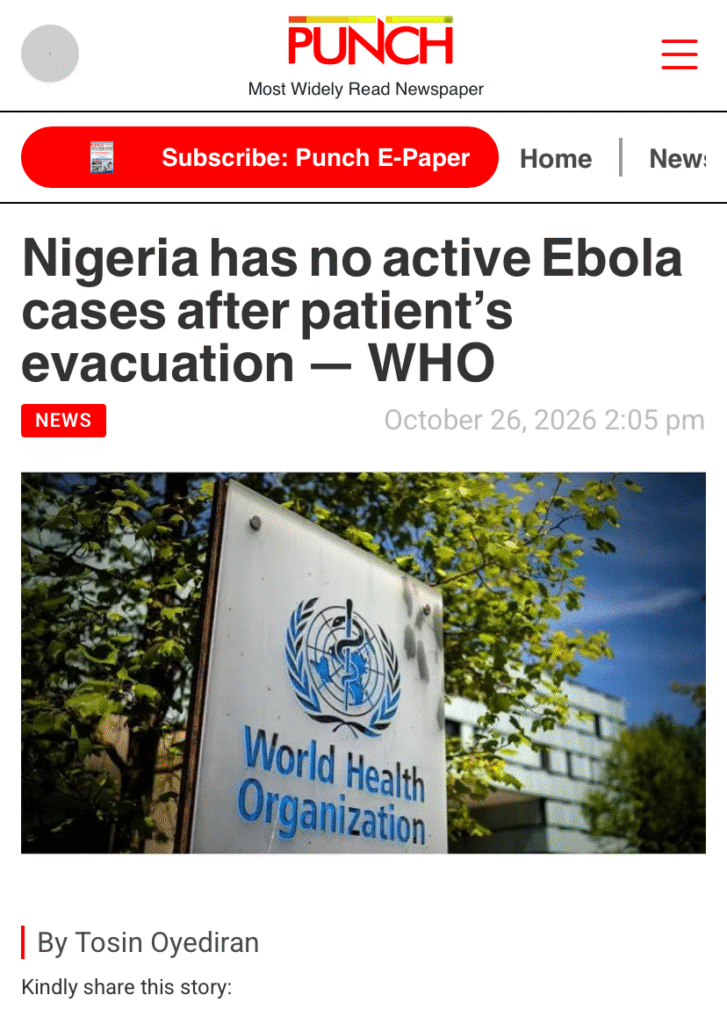
Following the medical evacuation of Nigeria’s Ebola index patient to Switzerland, several prominent media platforms published headlines claiming that the World Health Organization (WHO) had officially declared Nigeria “Ebola-free”.
While these reports correctly noted that no active, hospitalized patients remained in the country, framing the situation as an official “Ebola-free” clearance was a serious failure of newsroom verification and a misinterpretation of public health guidelines.
This explainer breaks down what major newsrooms published, why the failure to properly verify WHO criteria led to widespread misrepresentation, and why premature declarations pose a danger to public health reporting.
What Did Notable Media Houses Publish?
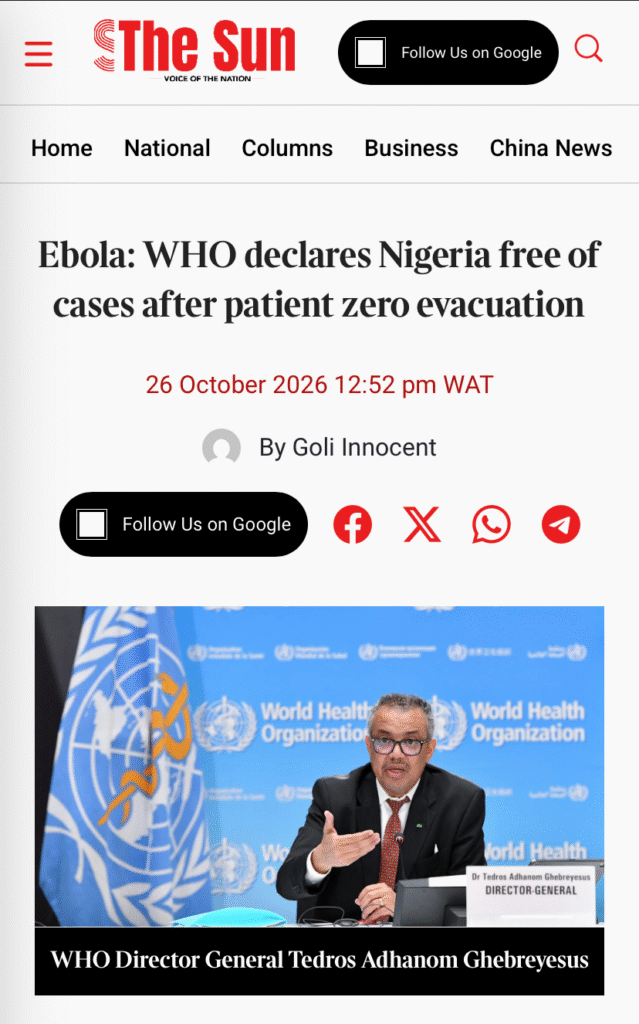
Major news organizations including Leadership,P.M. News, The Sun, BusinessDay, and Punch Newspapers rushed to publish headlines stating variants of: “WHO Declares Nigeria Ebola-Free After Patient’s Evacuation”.
Similar narratives were also pushed across digital platforms by institutional broadcast handles likeTVC News on Facebook.
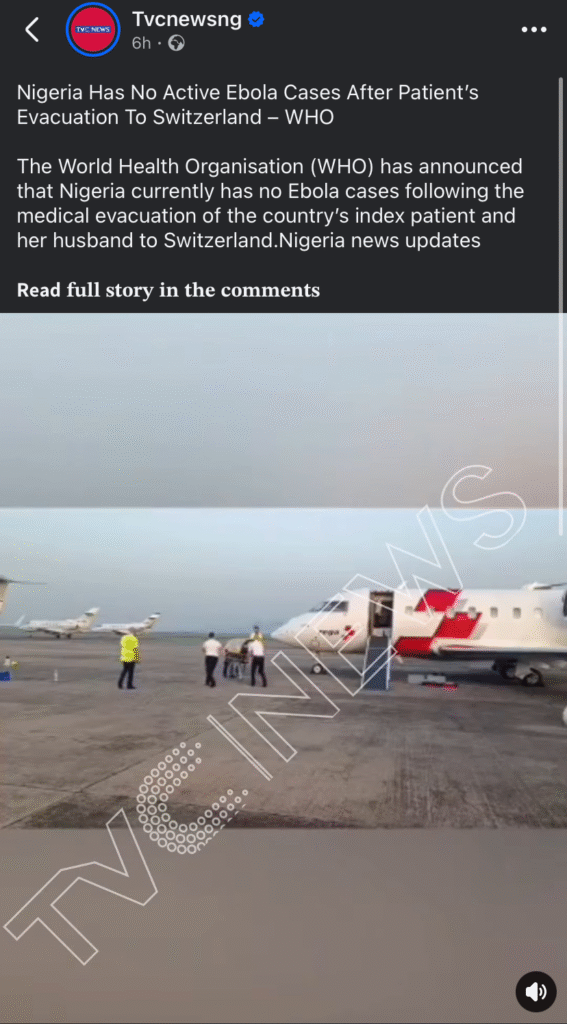
The core error across these reports was treating “zero active hospitalized cases” as synonymous with an official global health clearance.
What Did WHO Nigeria Actually Say ?
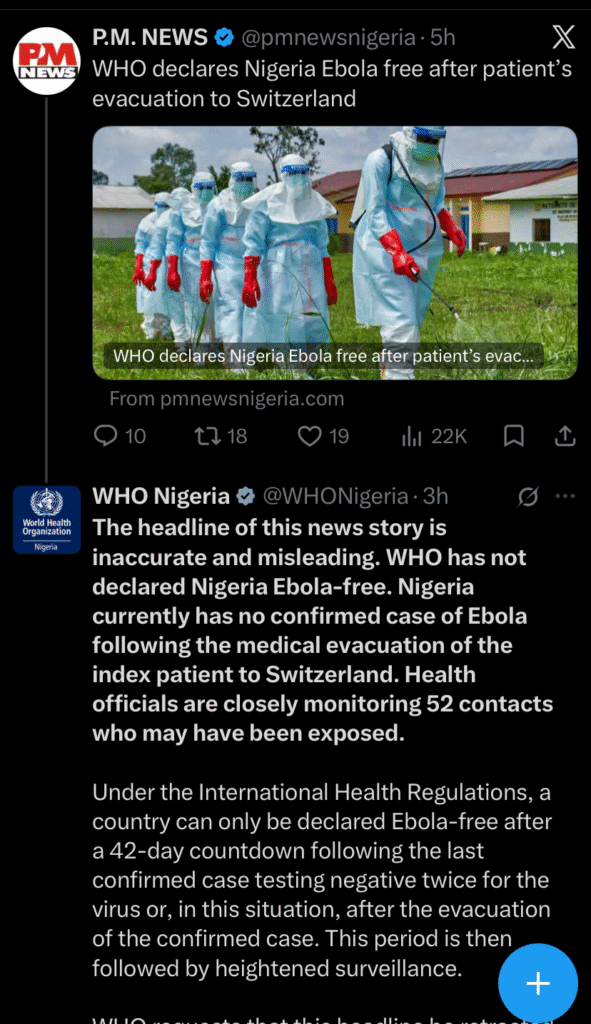
The institutional pushback from global health authorities was swift. In a direct rebuke published on its verified platform (WHO Nigeria X Post), the organization corrected the record, stating:
“The headline of this news story is inaccurate and misleading. WHO has not declared Nigeria Ebola-free. Nigeria currently has no confirmed case of Ebola following the medical evacuation of the index patient to Switzerland. Health officials are closely monitoring 52 contacts who may have been exposed.”
The distinction is vital: while the patient was evacuated out of the country for specialized care, the outbreak response protocol was far from over.
Why Did Newsrooms Fail to Verify the WHO Criteria?
The spread of this misrepresentation highlights a recurring vulnerability in fast-paced journalism: the race to publish positive updates without validating institutional criteria.
The Zero-Case Fallacy: Reporters and desk editors often assume that if a patient leaves a hospital or is evacuated abroad, the threat vanishes instantly, prompting premature “good news” framing.
Ignoring the Mandatory 42-Day Rule: Under global health protocols and the International Health Regulations (IHR), a country cannot be declared Ebola-free until a mandatory 42-day countdown has passed. According to the WHO Recommended Criteria for Declaring the End of an Ebola Outbreak, this timeline represents two maximum incubation periods (21 days each) starting from the date the last confirmed case tests negative twice, or, in cases of evacuation, following the departure of the patient. This rule was also underscored inFactCheckAfrica’s report verifying the WHO’s official guidelines.
Neglecting the Surveillance Phase: Newsrooms failed to consult standard outbreak procedures outlined in the WHO Ebola Outbreak Response Framework, which dictate that even after patient evacuation, a country must undergo heightened, active surveillance and contact monitoring before any official declaration can be issued by health authorities.
What Do the Contact Tracing Figures Mean?
While initial reports from outlets such asLeadership, P.M. News, The Sun, BusinessDay, and Punch Newspapers correctly noted that the primary patient was evacuated, they misconstrued zero active hospitalized cases as an official national “Ebola-free” status.
Public health tracking confirms that local medical teams and agencies are actively monitoring exposed contacts (noted between 52 and 53 individuals by health tracking updates including Forbes Africa to intercept any potential secondary transmission. Being identified as a contact under monitoring does not mean a person has Ebola; rather, it is a crucial containment measure during the incubation window.
What Are the Dangers of Premature Headlines?
When reputable media platforms fail to verify public health updates, it triggers several negative consequences:
Public Complacency: Citizens may assume the threat has completely vanished, leading them to drop basic hygiene and precautionary measures.
Misinformation Spread: Misleading headlines are quickly weaponized on digital platforms, creating a false sense of security that undermines official health communications.
Undermining Institutional Trust: When media outlets declare a country safe prematurely and authorities are forced to backtrack, it confuses the public and breeds skepticism toward real health updates.
The widespread media reports and headlines stating that the World Health Organization declared Nigeria “Ebola-free” are FALSE. While the index patient has been medically evacuated, leaving no currently hospitalized cases in the country, the WHO has explicitly clarified via its official X channel that Nigeria is not Ebola-free and must undergo the mandatory 42-day surveillance and monitoring window before any such declaration can legally or medically be made.
For newsrooms, this incident serves as a critical reminder that rigorous verification of health regulations must always take precedence over the rush to break positive headlines.