FACT-CHECK: Did Tinubu Borrow ₦120 Trillion in Three Years While 16 Previous Leaders Borrowed ₦46 Trillion in 63 Years?

BY: Oluwatoyin Hawal Momolosho
Claim:
A viral social media graphic claims that 16 Nigerian leaders borrowed ₦46 trillion over 63 years, while President Bola Tinubu borrowed ₦120 trillion in three years despite removing the fuel subsidy.
Verdict: Misleading.
Full Text:
A graphic shared on social media compares Nigeria’s public debt under successive administrations, claiming that 16 leaders borrowed ₦46 trillion over 63 years, while the current president Tinubu borrowed ₦120 trillion in just three years.
It also highlights the removal of the petrol subsidy, suggesting that the administration’s borrowing is excessive despite the policy change.
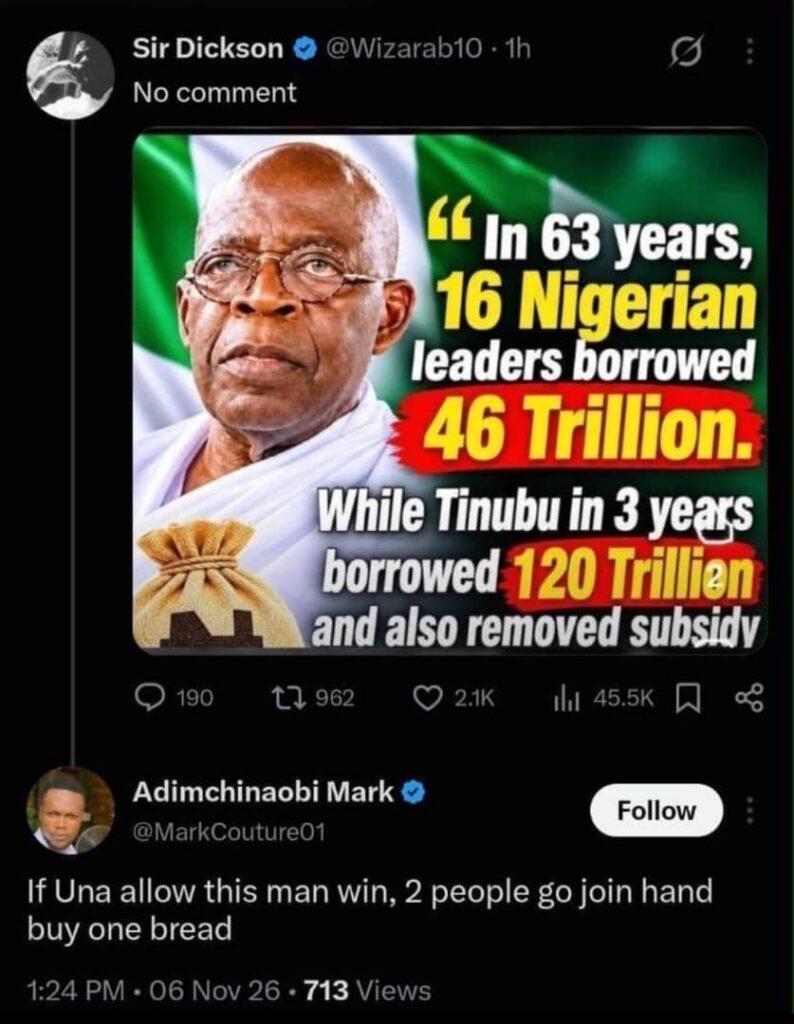
The graphic does not identify the sources of its figures or explain how the ₦120 trillion was calculated. It also fails to distinguish between the total public debt outstanding at a particular time and the amount of new borrowing undertaken by a government.
Verification:
FactCheckAfrica review records published by the Debt Management Office (DMO) shows that Nigeria’s total public debt stood at ₦46.25 trillion as of December 31, 2022. This figure represented the country’s outstanding domestic and external debt, including obligations owed by the federal and state governments and the Federal Capital Territory. It was not the total amount borrowed by previous administrations since independence in 1960.
The DMO subsequently reported a public debt of ₦87.38 trillion as of June 30, 2023, shortly after Tinubu assumed office on May 29, 2023. By March 31, 2025, the figure had risen to approximately ₦149.39 trillion. The latest available DMO report, covering June 30, 2026, puts total public debt at approximately ₦166.79 trillion.
These figures confirm a substantial increase in Nigeria’s reported public debt during Tinubu’s presidency. However, the increase in outstanding debt does not automatically represent the amount of new loans obtained during that period.
Nigeria’s public debt includes foreign-currency obligations whose naira value can increase when the naira depreciates. New borrowing, repayments and the recognition of existing liabilities can also affect the reported debt stock. Therefore, the difference between debt figures at two dates cannot, by itself, establish how much new money the government borrowed.
The claim that previous administrations borrowed only ₦46 trillion over 63 years is equally misleading because it treats the debt recorded in December 2022 as though it represented cumulative borrowing since independence. Establishing total borrowing across successive administrations would require historical records of loans, repayments and other debt transactions.
Tinubu announced the removal of the petrol subsidy during his inauguration on May 29, 2023. However, the policy decision alone does not establish how much the government saved or whether those savings were sufficient to eliminate the need for borrowing. Assessing its impact requires examining actual subsidy expenditure, government revenue, spending and debt-servicing obligations.
Conclusion:
The viral claim is misleading. Official records confirm that Nigeria’s public debt increased substantially under Tinubu, reaching approximately ₦166.79 trillion by June 20230. However, the ₦46 trillion figure refers to outstanding debt at the end of 2022, not the cumulative borrowing of 16 leaders over 63 years. The graphic also fails to substantiate its claim that Tinubu borrowed ₦120 trillion in new loans.
A definitive assessment of the administration’s borrowing requires a detailed examination of new loans, repayments, exchange-rate effects and other debt adjustments. The figures presented in the viral graphic are insufficient to establish its central claim.