EXPLAINER: What the Dangote Refinery IPO Means and What Investors Are Actually Buying

BY: Oluwatoyin Hawal Momolosho
The opening of the Dangote Petroleum Refinery and Petrochemicals FZE Initial Public Offering (IPO) on September 14, 2026, has generated significant public interest, with many Nigerians seeking to buy shares in one of Africa’s largest industrial projects.
The offer, priced at ₦525 per share, allows eligible investors to apply for a minimum of 10 shares, worth ₦5,250. The offer is scheduled to close on October 13, 2026.
However, several explanations of the offer have blurred the difference between applying for shares, being allotted shares and becoming a shareholder. There have also been claims about guaranteed returns and the effect of the IPO on Aliko Dangote’s wealth.
FactCheckAfrica examined the official IPO information, regulatory notices and reports surrounding the public offer to clarify what the evidence shows.
What is being offered?
The Dangote Refinery IPO involves 4.1 billion ordinary shares at ₦525 each.
At the offer price, the public offer is expected to raise about ₦2.15 trillion. Reuters reported that the funds are intended to support the refinery’s expansion plans, including increasing its refining capacity to about 1.4 million barrels per day.
The official IPO website describes the offer as an opportunity for eligible investors to apply for shares in Dangote Petroleum Refinery and Petrochemicals FZE.
It also makes an important distinction, applying for shares does not by itself make an applicant a shareholder.
What happens after an investor applies?
According to the official IPO information, the process involves subscription, allotment and listing.
After the offer closes, applications will be processed and shares allotted in accordance with the approved terms of the offer. The official website currently lists both the allotment date and listing date as “to be confirmed.”
This means that payment for an application should not be interpreted as confirmation that the applicant has received every share requested.
The official website states that an investor becomes a shareholder if shares are allotted to the investor and recorded through the approved process.
The distinction is important because the IPO is a public offer rather than an already-listed stock that investors can simply buy and sell on the Nigerian Exchange.
Does ₦525 guarantee that an investor will make money?
No! The ₦525 figure is the offer price. It is not a guarantee of what the shares will be worth after listing.
The official IPO information warns that share prices can rise or fall after listing and that investors could lose some or all of the money invested. It also states that dividends are not guaranteed.
According to the company, shareholders may receive dividends if and when they are declared. Such payments depend on factors including the company’s performance, cash requirements and decisions of its board.
Therefore, statements presenting the IPO as a guaranteed source of profit or guaranteed dividend income go beyond what the official offer documents establish.
What about claims that Dangote’s wealth increased because of the IPO?
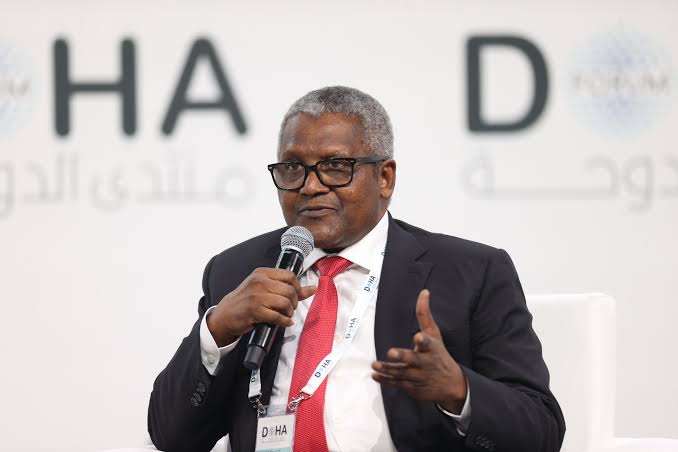
A separate claim circulated after the IPO opened, with reports saying Aliko Dangote’s wealth had increased by about $19.9 billion, from approximately $31.4 billion to $51.3 billion.
The figures themselves were genuine. Forbes’ real-time billionaire tracker placed Dangote’s estimated wealth at about $51.3 billion on September 14, 2026.
However, the timing of the IPO and the reason for the wealth revaluation are two different issues.
FactCheckAfrica’s review of the claim found that the major revaluation was linked to a $2.5 billion private placement completed in July 2026, rather than investors purchasing shares through the public IPO when it opened in September. Forbes and Billionaires Africa both distinguished the July private placement from the September public offer.
The July transaction provided a new reference point for valuing the previously private refinery, which was then reflected in Forbes’ estimate of Dangote’s existing stake.
The public IPO, meanwhile, opened on September 14 and offered 4.1 billion shares at ₦525 each.
Why does this distinction matter?
The two transactions involve different investors and occurred at different times. The July private placement involved investors buying into the refinery before the public offer.
The September IPO opened the opportunity for eligible members of the public and other investors to subscribe for the shares being offered.
FactCheckAfrica also noted that the public IPO had an offer price of ₦525, but that should not be confused with a freely established secondary-market price. At the time the offer opened, the shares had not yet gone through the allotment and ordinary market-trading process.
Consequently, saying that Dangote’s estimated wealth increased because millions of Nigerians bought his refinery shares on the opening day incorrectly links the September public offer to a valuation adjustment that had its principal trigger in the July private placement.
What does the evidence show?
The Dangote Refinery IPO is a genuine public offer approved by Nigeria’s Securities and Exchange Commission (SEC).
The offer comprises 4.1 billion ordinary shares at ₦525 each, with a minimum subscription of 10 shares or ₦5,250, and runs from September 14 to October 13, 2026.
However, applying for the shares is not the same as receiving them. Allotment takes place after the offer closes, and the official IPO website says the allotment and listing dates are yet to be confirmed.
The evidence also does not support describing dividends or investment returns as guaranteed. The company’s own IPO information expressly warns that share values can rise or fall and that dividends depend on the company’s circumstances and board decisions.
Similarly, the reported increase in Aliko Dangote’s estimated wealth was real, but attributing the entire increase to the public IPO is misleading. The evidence reviewed by FactCheckAfrica shows that the major valuation change was connected to the earlier $2.5 billion private placement.
Conclusion
The Dangote Refinery IPO is open, but some explanations of what it means for investors have conflated separate stages and transactions.
Investors can apply for the refinery’s shares at ₦525 each, but an application does not automatically mean that all requested shares will be allotted. Likewise, the offer price does not guarantee future returns or dividends.
The September IPO should also be distinguished from the July private placement that provided the valuation reference behind the reported increase in Dangote’s estimated wealth.
FactCheckAfrica therefore finds that while the Dangote Refinery IPO is genuine and open to eligible investors, claims that blur subscription, allotment, listing, guaranteed returns and the July private placement can give a misleading picture of what the public offer actually represents.