INVESTIGATION: How Recycled and Staged Videos Are Deepening Nigeria’s Insecurity Crisis


BY: Mustapha Lawal
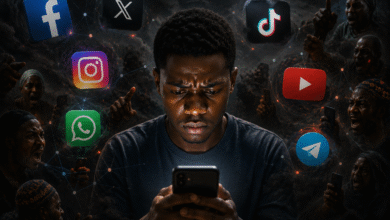
On May 15, 2026, gunmen abducted dozens of pupils and teachers in Oriire Local Government Area of Oyo State. Within days, social media platforms (TikTok, Facebook, Instagram, X and WhatsApp) were flooded with disturbing videos purportedly showing the victims being tortured by their captors.
The footage sparked outrage, fear, and widespread panic. Many users shared the clips believing they were watching real-time evidence of the abducted children’s ordeal. But some of the videos were not from Oyo State. One was not even from Nigeria. Fact-checkers later traced the footage to Burkina Faso, where it had appeared online weeks before the abduction occurred.
The Oyo case is only one example of a growing trend that has become increasingly common across Nigeria’s digital space. As insecurity continues to affect communities across the country, recycled videos, foreign conflict footage, staged skits, and manipulated content are regularly presented as evidence of ongoing attacks, kidnappings, military operations, and terrorist activities.
These misleading videos often travel faster than verified information, shaping public perception and amplifying fear before authorities or journalists can establish the facts. In an era where insecurity dominates public discourse, old videos are routinely recycled as breaking news while unrelated footage is repackaged to fit new crises.
FactCheckAfrica reviewed several major cases that illustrate how recycled and fabricated visual content is increasingly distorting public understanding of Nigeria’s security situation.
CASE ONE: The “Torture of Oyo Students” Video
Following the abduction of 46 pupils and teachers in Oriire Local Government, Oyo State on May 15, 2026, panic spread online. A viral video showed bandits torturing pupils abducted from Oriire Local Government Area of Oyo State.
Claim:
On May 22, 2026, users including Facebook user Omooba of Lagos and various X (Twitter) accounts shared a 54-second video claiming it showed bandits torturing the abducted Oyo students by pouring melting plastic on them.
Verdict:
False! The video was recorded in Burkina Faso weeks before the Oyo abduction occurred.
Verification
FactCheckAfrica used InVID-WeVerify to extract keyframes and conduct reverse-image searches. The investigation revealed that the same footage had been published on X on April 29, 2026, by a user identified as Zoya, who described it as showing ‘young Peuls’ accused of terrorism in Burkina Faso.
Additional traces of the footage were found on Instagram (@williamcharityo) as early as April 7, 2026. Because the video existed before the Oyo kidnapping occurred, it could not possibly depict the abducted pupils. Visual and contextual analysis further confirmed that the footage originated from Burkina Faso and had no connection to Nigeria.
Conclusion
The video did not show the abducted Oyo pupils. It was recycled footage from Burkina Faso that predated the incident by several weeks.
CASE TWO: The “Ogun State Fake Bandit” Staged Skits
In late May 2026, residents of Atan, Ado-Odo/Ota in Ogun State were alarmed by viral TikTok videos suggesting an active bandit invasion. Videos circulating on TikTok showed an ongoing bandit invasion of Atan community in Ado-Odo/Ota Local Government Area of Ogun State.
Claim
On May 19, 2026, a TikTok user known as “Nice Boy” (real name Kowiu Oloyede, 25) posted a video of himself and two others hiding in a bush with gunshot sound effects, captioning it “Bandit is in Atan, help us ooo.” On May 21, 2026, he posted a second video kneeling before a man he falsely identified as a kidnapper.
Verdict
Fabricated. The suspect confessed to staging the content for social media clout.
Verification
In May 2026, TikTok users began sharing videos warning residents about alleged bandit activity in Atan. One video showed individuals hiding in bushes while gunshot sounds played in the background. Another portrayed a supposed kidnapper confronting local residents.
The videos generated widespread concern and prompted complaints to security agencies. The Ogun State Police Command, led by DSP Oluseyi Babaseyi, conducted a physical investigation after a complaint by resident Ayinla Sodiq on May 23, 2026. Police arrested Oloyede on May 24, 2026. Verification relied on confession statements where Oloyede admitted he staged the events to emulate famous streamer Peller and gain followers (his count rose from 60 to over 1,000).
Police said Oloyede admitted staging the videos behind his fashion shop using local youths as actors. Investigators also found that a Fulani herder featured in one of the clips was not a kidnapper and had merely been recorded without understanding the context of the video.
Police further disclosed that the suspect has been transferred to the State Criminal Investigation Department (SCID), Eleweran, Abeokuta.
Conclusion
No bandit invasion occurred in Atan. The videos were staged and deliberately presented as real security incidents for online engagement.
CASE THREE: The “Sudan RSF” Misattribution
Amidst general insecurity fears in Nigeria in April 2026, a video of armed men in a desert setting circulated on Facebook. The video was widely circulated on Facebook in April 2026 with claims that it depicted Nigerian bandits openly displaying weapons.
Claim:
A viral video showed Nigerian bandits celebrating after a successful operation. On April 21, 2026, Facebook user mc ese jomo shared a video claiming the armed men were Nigerian bandits taking selfies, urging the police to track them.
Verdict
False! The footage showed fighters from Sudan’s Rapid Support Forces (RSF), not bandits in Nigeria.
Verification
FactCheckAfrica analysed the footage using reverse image searches and traced it to reports from Sudan’s ongoing civil conflict. The search linked the footage to reports by Tamaturk (a Turkish news platform) about the RSF. The armed men were identified as members of the Rapid Support Forces operating in the Darfur region. Visual analysis also matched the uniforms and terrain to known RSF operations. No evidence linked the footage to Nigeria.
Conclusion
The video originated from Sudan’s civil war and was falsely presented as evidence of Nigerian bandit activity.
CASE FOUR: The “Cameroon Separatist” Kidnap Hoax
Following a spike in school kidnappings in Nigeria (including the March 2024 Kaduna abductions), a graphic video resurfaced in 2024 and was recycled in subsequent years.
Claim:
A video showing schoolchildren being humiliated by armed men depicted recently kidnapped Nigerian students. WhatsApp users circulated a 1-minute 31-second video showing schoolchildren in white and blue uniforms being forced to strip naked at gunpoint, claiming it was recent footage of kidnapped Nigerian students.
Verdict
Misleading. The footage was recorded in Cameroon in 2022 and involved separatist fighters, not Nigerian kidnappers.
Verification
The video has repeatedly resurfaced following major school abductions in Nigeria. Fact-checkers traced the footage to January 2022 in Bokova, Cameroon. Dubawa carried out a Google Reverse Image Search which traced the video to the January 2022 post. Cross-referencing with a Human Rights Watch report and a BBC fact-check from January 2022 confirmed the location as Cameroon and the actors as Anglophone separatists
The perpetrators were identified as Ambazonia separatist fighters involved in the Anglophone conflict. Google Reverse Image Search located the earliest versions of the video, while reports from Human Rights Watch and BBC News confirmed its origin and context.
Despite multiple debunks, the footage continues to be recycled whenever school kidnappings occur in Nigeria.
Conclusion
The footage does not depict Nigerian students or Nigerian kidnappers. It is an old video from Cameroon repeatedly reused to exploit public fear.
Taken together, all four cases reveal a recurring pattern. Viral videos linked to Nigerian insecurity frequently fall into three categories: recycled footage from foreign conflicts, deliberately staged content created for social media engagement, and genuine recordings that are stripped of context and reinterpreted.
CASE FIVE: Real Bandit Propaganda on TikTok
Unlike the recycled fakes, genuine criminal groups in Northwest Nigeria have adopted TikTok for propaganda. Throughout late 2025 and early 2026, verified bandits in Zamfara and Katsina states began hosting TikTok Live sessions.
Claim:
Videos showing armed bandits displaying cash, weapons, and issuing threats on TikTok are staged social media content.
Verdict
True! Several verified criminal groups have used TikTok as a propaganda platform.
Verification
Unlike the previous cases, investigations by journalists and security analysts found that some videos circulating on TikTok are authentic recordings produced by actual criminal groups. Throughout late 2025 and early 2026, bandits operating in Zamfara and Katsina states increasingly appeared on TikTok Live broadcasts.
These videos featured armed men displaying weapons, motorcycles, and large sums of money allegedly obtained through ransom payments. Some broadcasts included threats against communities and government officials.
Security analyst Zagazola Makama, alongside multiple media organisations, documented and monitored several of these broadcasts. Law enforcement agencies later confirmed the identities of some individuals featured in the videos.
Conclusion
While many viral security videos are fake or misleading, some are genuine propaganda produced by criminal groups seeking publicity, intimidation, and recruitment opportunities.
Why Recycled Violence Videos Are Dangerous
The impact of these videos extends far beyond online misinformation. False security footage can trigger panic in affected communities, undermine confidence in law enforcement, overwhelm emergency response systems, and distort public understanding of security realities.
When citizens repeatedly encounter fabricated videos presented as genuine attacks, they may begin making decisions based on false information. Communities may flee areas unnecessarily, businesses may suspend operations, and public trust in official information can deteriorate.
At the same time, repeated exposure to false alarms can create a “boy who cried wolf” effect. When genuine threats emerge, some citizens may dismiss authentic warnings as yet another social media hoax. This dynamic creates risks both when misinformation is believed and when accurate information is ignored.
Security analysts warn that misinformation creates a secondary crisis alongside physical insecurity. False reports can trigger panic movements, overwhelm emergency hotlines, undermine trust in verified reporting, and complicate ongoing security operations. In some instances, communities have altered travel plans or closed businesses based on videos later proven to be false.
The challenge becomes even greater as advances in artificial intelligence, video editing software, and content generation tools make fabricated media increasingly difficult to detect.
How Fact-Checkers Verify Viral Videos and How You Can too
To establish whether a viral security video is genuine, investigators typically rely on several verification techniques. Reverse image and video searches help determine whether footage appeared online before the event it supposedly depicts.
Geolocation analysis compares visible landmarks, vegetation, terrain, weather patterns, and infrastructure against known locations. Linguistic experts analyse spoken language, dialects, and accents.
Researchers also compare uniforms, weapons, vehicles, and insignia with those used by documented military forces or armed groups. Where available, metadata and digital forensic examinations help identify signs of editing, manipulation, or AI generation.
Most importantly, claims are cross-checked against official statements, local reporting, eyewitness accounts, and independent sources. No single method is usually sufficient on its own. Reliable verification often requires multiple layers of evidence.
FactCheckAfrica has put together this guide on how you can verify images/videos (here: https://factcheckafrica.net/verify-before-you-share-why-nigerians-must-check-images-and-videos-before-dissemination/)
Conclusion
Nigeria’s security challenges are real, but so is the growing problem of misinformation surrounding them. The rise of recycled, fabricated, and misattributed videos represents a growing challenge in Nigeria’s information environmen as rightly noted by Brittani Kollar, who directs media literacy programs at the Poynter Institute, noted that during periods of instability and war, archived imagery and recordings frequently reappear on social networks, wrongly attributed to present-day events.
Speaking with DW, she explained that obtaining fresh video from conflict zones is exceptionally difficult. This scarcity creates a vacuum often filled by altered or fraudulent content, which may have been repurposed from unrelated situations or already debunked as inaccurate.
Investigations by fact-checkers, journalists, and security agencies continue to show that many viral videos depicting banditry, terrorism, kidnappings, and military operations are either recycled from unrelated conflicts, taken from other countries, or deliberately staged for social media engagement. At the same time, genuine criminal groups are increasingly using platforms like TikTok to spread propaganda, intimidate communities, and amplify their visibility.
This convergence of authentic threats and fabricated content has created a dangerous information environment where visual evidence alone is no longer enough to establish the truth. As recycled violence videos continue to circulate across social media platforms, the ability to verify content before sharing it has become as important as the fight against insecurity itself.
The danger is no longer only the violence itself. Increasingly, it is the inability of citizens to distinguish authentic evidence from recycled fear. In Nigeria’s digital information environment, a video can travel across borders, across years, and across conflicts in minutes. By the time the truth catches up, the panic it created may already have done its damage.