FACT-CHECK: Oshiomhole’s Denial Contradicts His Remarks on Alleged Forged Signatures in Natasha Suspension Report

BY: Mustapha Lawal
Claim:
Senator Adams Oshiomhole denied reports that he alleged senators’ signatures were forged on the report that recommended the suspension of Senator Natasha Akpoti-Uduaghan, insisting that the media misinterpreted his comments.
Verdict:
Misleading. A review of Oshiomhole’s interview shows that he referenced complaints from senators who claimed their signatures appeared on the report despite not signing it. While he did not directly accuse anyone of forgery, his remarks clearly raised questions about the authenticity of some signatures attached to the document.
Full Text:
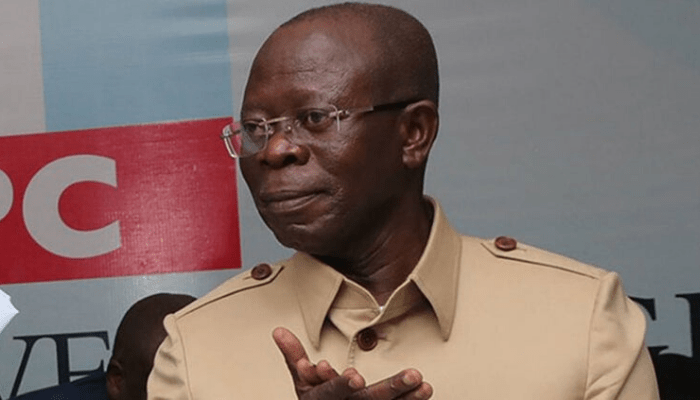
Public officials often accuse journalists of misquoting or misrepresenting their statements when public reactions become intense. This was the case after Senator Adams Oshiomhole, representing Edo North Senatorial District, appeared on Politics Today on AIT and discussed the controversy surrounding the suspension of Senator Natasha Akpoti-Uduaghan.
During the interview, Oshiomhole suggested that some senators whose names appeared on the committee report recommending Akpoti-Uduaghan’s suspension had complained that they neither signed nor endorsed the document.
His comments quickly generated debate across social media and news platforms, with several media organisations reporting that the former Edo State governor had alleged that signatures on the report were forged.
However, less than 24 hours later, Oshiomhole issued a statement denying that he made any allegation of forgery and accused sections of the media of twisting his remarks.
The contradiction prompted FactCheckAfrica to review the interview and determine whether the senator was accurately reported.
Verification:
FactCheckAfrica reviewed the video recording of the AIT interview.
Responding to a question about Senate Leader Opeyemi Bamidele’s description of Akpoti-Uduaghan’s suspension as one of the Senate’s lowest moments, Oshiomhole stated:
“There are people who wonder, who claim that their signatures were forged on that document. Someone like Senator Kingibe… she told me, ‘but I didn’t sign that report, and I didn’t agree with the content,’ but her name was published.”
He further explained the Senate’s committee process, noting that committee members are expected to sign reports they endorse and may withhold their signatures if they disagree with the findings.
According to him:
“The committee will decide and agree on its findings and specific recommendations, and members of the committee are expected to sign the report to reflect the committee’s collective decision. So, where many don’t accept, they could abstain from signing it because, to sign is to endorse.”
Oshiomhole then added:
“There are one or two or three senators who said they didn’t sign, but our names were there, how? Some said they may have attached an attendance register, which is inappropriate.”
These remarks are central to the controversy.
Although Oshiomhole framed the allegation as complaints made by other senators rather than an independently verified conclusion, he expressly referenced claims that signatures were forged and repeated concerns that some senators’ names appeared on the report despite their alleged refusal to sign it.
His subsequent statement argued that he never accused anyone of forgery. However, the interview recording shows that the word “forged” was indeed used during his comments and that he publicly relayed allegations questioning the authenticity of signatures attached to the report.
FactCheckAfrica also found that concerns about the committee report are not entirely new. Earlier reports had alleged that signatures attached to the document may have been drawn from an attendance register rather than from formal endorsement of the report itself.
However, no official investigation has publicly established that any signature was forged.
Conclusion:
Senator Oshiomhole’s claim that he never suggested signatures on the Natasha Akpoti-Uduaghan suspension report were forged is misleading.
While he did not directly accuse any individual of forgery, the interview shows that he explicitly referred to senators who claimed their signatures were forged and questioned how their names appeared on a report they allegedly did not sign. Therefore, media reports stating that Oshiomhole raised concerns about possible forged signatures were based on comments he made during the interview and were not merely a product of media misinterpretation.