Ekiti Decides 2026: Everything You Need to Know About Saturday’s Governorship Election

By Mustapha Lawal
On Saturday, June 20, 2026, voters across Ekiti State will head to the polls to elect their next governor in one of Nigeria’s most important off-cycle governorship elections.
Beyond determining who occupies the Government House in Ado-Ekiti for the next four years, the election is also being closely watched as a major test of Nigeria’s evolving electoral system, the implementation of the Electoral Act 2026, electronic result transmission, election security coordination, and the country’s ability to manage information pollution during high-stakes political contests.
As political campaigns end and electoral officials complete final preparations, here is a comprehensive guide to everything citizens, journalists, election observers, and stakeholders need to know about the election.
The election will take place on Saturday, June 20, 2026, across all 16 Local Government Areas of Ekiti State. According to the Independent National Electoral Commission (INEC), voting will take place in 16 Local Government Areas; 177 Registration Areas (Wards); in 2,445 Polling Units
Polling units are expected to open simultaneously by 8:30 a.m., while accreditation and voting will be conducted using the Bimodal Voter Accreditation System (BVAS). Results from polling units will subsequently be uploaded electronically through the INEC Result Viewing Portal (IReV).
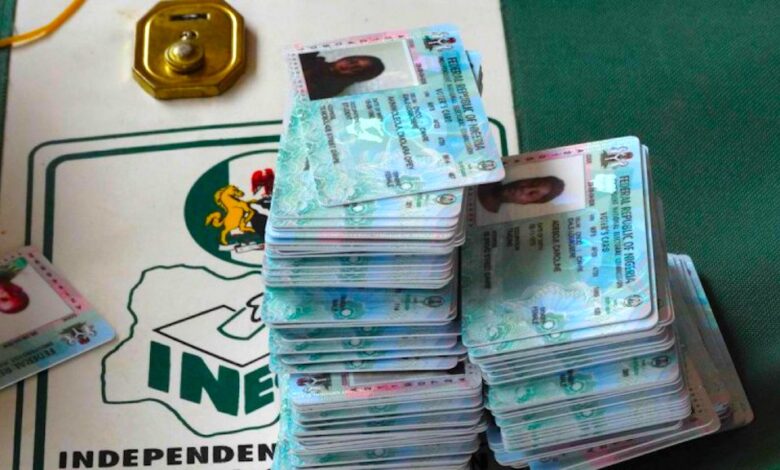
The election will be decided by over one million registered voters. Official figures released by INEC show that Ekiti State currently has approximately 1,059,360 registered voters. Of this figure, about 1,028,929 Permanent Voter Cards (PVCs) have already been collected, representing one of the highest PVC collection rates recorded in recent election cycles at approximately 97.1 percent.
The high PVC collection rate suggests strong voter readiness ahead of Saturday’s poll. However, citizens should note that only voters in possession of valid PVCs can participate in the election.
Who Are the Main Candidates?
Although multiple political parties are participating, the political landscape has undergone significant changes in the months leading to the election.
Governor Biodun Oyebanji (APC): The incumbent governor, Biodun Oyebanji, is seeking re-election on the platform of the All Progressives Congress (APC). His campaign has focused heavily on continuity, infrastructure development, governance stability, and institutional endorsements. The APC has also enjoyed visible support from prominent national figures, including the visit of Vice President Kashim Shettima during the party’s final campaign activities.
Professor Oyebanji Ikusayedegbe Olajuyin (Labour Party): Among opposition contenders, the Labour Party has emerged as one of the most visible alternatives. Its candidate, Oyebanji Ikusayedegbe Olajuyin, is a medical administrator and former Chief Medical Director of Ekiti State University Teaching Hospital (EKSUTH). His campaign has focused on governance reforms, public service delivery, and concerns about the increasing monetisation of politics.
The PDP Controversy
One of the most significant developments ahead of the election has been the exclusion of the Peoples Democratic Party (PDP) candidate from INEC’s final list due to the party’s prolonged internal leadership crisis. The decision generated legal disputes and political controversy, with some opposition stakeholders arguing that the development limits electoral competitiveness.
Why Analysts Are Watching the Election Closely
Several factors make this election particularly important beyond Ekiti State.
- A Test of the Electoral Act 2026
Civil society organisations and election observers have described the election as one of the first major field tests of the Electoral Act 2026. Particular attention will focus on electronic result transmission, BVAS performance, polling unit result uploads, transparency in collation processes, and resolution of technical challenges. The election may provide important lessons ahead of future nationwide elections.
- Testing Public Confidence in Technology
INEC plans to deploy more than 2,400 BVAS devices and nearly 10,000 ad hoc personnel across the state. Election observers will closely monitor whether electronic accreditation and result uploads function efficiently across all polling units.
- The “Ekiti South” Political Question
Another issue shaping political conversations is the longstanding demand for power rotation. Advocates of the Ekiti South Agenda argue that since Nigeria’s return to democracy in 1999, governors have largely emerged from Ekiti Central and Ekiti North senatorial districts. Although the issue is not formally recognised in law, some observers believe it may influence voting patterns in certain communities.
Security Preparations
Security remains one of the most closely monitored aspects of the election. The Nigeria Police Force, Inter-Agency Consultative Committee on Election Security (ICCES), Nigerian Army, NSCDC, DSS, Amotekun and other security agencies have announced extensive deployments across the state. Reports indicate that thousands of security personnel have been mobilised to protect polling units, collation centres, election officials, and critical infrastructure.
Election observers have nevertheless identified several risks that require monitoring, including: vote buying, political thuggery, voter intimidation, ballot snatching, and disinformation campaigns. The Court of Appeal has already constituted the Ekiti Governorship Election Petitions Tribunal to handle any legal disputes arising from the election process.
What Journalists Need to Know
For journalists covering the election, accuracy will be as important as speed. INEC has accredited hundreds of media professionals from dozens of organisations to cover the poll. Media practitioners are expected to comply strictly with electoral regulations governing election reporting. Particular attention should be paid to result declaration and verification before publication. Only authorised INEC officials can officially declare election results. Journalists must avoid projecting winners or announcing unofficial results before the commission completes the collation process. Election periods are especially vulnerable to fake results, manipulated videos, deepfakes, misleading screenshots, false security alerts among others. Verification must precede publication.
What Citizens Should Expect at Polling Units
Voters should arrive early with their PVCs. Upon arrival:
- Voter accreditation will be conducted using BVAS.
- Accredited voters will receive ballot papers.
- Voting will take place.
- Votes will be counted at the polling unit.
- Results will be entered on official result sheets.
- Results will be uploaded electronically to IReV.
Citizens can monitor official uploads through the portal once polling unit results become available. Several election observation groups have established mechanisms for citizens to report vote buying, violence, intimidation, delayed opening of polling units, electoral misconduct and logistics failures.
Reports can be submitted through accredited observer networks and election monitoring platforms. Citizens should rely on official reporting channels rather than forwarding unverified social media claims.
The Information War: A Growing Threat
Beyond physical security, election observers increasingly warn about another threat: information disorder. Deepfakes, manipulated videos, recycled election footage, and fabricated results have become recurring features of modern elections.
In previous elections, false claims have circulated claiming: polling units were attacked, candidates had withdrawn, results had been declared, security agencies had cancelled voting. Many of these claims later proved false.
As a result, citizens are encouraged to verify information before sharing and rely on trusted sources for election updates.
FactCheckAfrica as a core member of the Ballot Eyes Working Group, an election observation and monitoring group will be active to document and report verified electoral activities and processes, including irregularities in real time, as recently done during FCT council elections. Citizens can report their observations to the group via text or WhatsApp message to +2348089313062.
Why This Election Matters
Although Ekiti is one of Nigeria’s smaller states, its elections often attract national attention because they serve as indicators of broader political trends. Saturday’s election will provide insight into public confidence in electoral technology, the effectiveness of the Electoral Act 2026, election security coordination, information integrity during elections, the strength of opposition politics, and voter participation patterns.
For voters, however, the significance is even simpler. The election represents an opportunity to determine who governs the state for the next four years.
As Ekiti residents head to polling units on Saturday, the integrity of the process will depend not only on electoral officials and security agencies but also on citizens’ commitment to peaceful participation, responsible information sharing, and democratic engagement.
The votes will be counted at polling units, transmitted through official channels, and will determine the next chapter of governance in Ekiti State. Until then, every claim should be verified, every result cross-checked, and every citizen encouraged to participate peacefully in the democratic process.