BY: Mustapha Lawal
Osun State will go to the polls on Saturday, August 15, 2026, to elect a governor who will lead the state for the next four years. The election is one of Nigeria’s final major electoral exercises before the 2027 general elections and is therefore attracting attention beyond the state’s borders.
For the Independent National Electoral Commission (INEC), the election is another test of its ability to organise an increasingly technology-driven election. For political parties and candidates, it is a contest for control of one of the South-West’s politically competitive states. For citizens, however, the most important question is simpler: how can they participate safely, understand what is happening and distinguish verified information from the claims, rumours and political narratives that will surround the election?
This is particularly important because Osun has a long history of closely fought elections, political realignments and post-election litigation. The 2026 election is taking place in an environment where political competition has already generated tension, while misinformation, vote-buying and concerns about electoral violence remain significant issues.
When and where will the election be held?
The election is scheduled for Saturday, August 15, 2026, across Osun State’s 30 local government areas, 332 registration areas and 3,763 polling units. INEC has published the election timetable and has continued preparations for the poll.
Citizens should therefore be cautious about social media posts announcing alternative election dates, claiming that voting has been postponed or suggesting that voting will take place only in selected local government areas. Such information should be checked against INEC’s official communication channels before it is shared.
The election is an off-cycle governorship poll. Osun’s governorship election does not take place alongside the presidential and National Assembly elections because of the state’s altered electoral cycle, which itself has roots in previous election litigation. The 2007 Osun governorship dispute lasted almost three years before the Court of Appeal nullified the election of Olagunsoye Oyinlola and declared Rauf Aregbesola the winner. That judgment changed the state’s electoral timetable and contributed to Osun becoming an off-cycle election state.
This history matters because the Osun governorship election is not simply about who wins on election day. The legal process surrounding the election can also determine how the outcome is ultimately settled.
Who is contesting?
INEC initially cleared 14 candidates for the election. However, developments in the final days before the poll have changed the field. One candidate, the All Progressives Grand Alliance (APGA) candidate Adeyemi-Doro Adesina, withdrew from the race and endorsed the APC candidate. INEC also announced the inclusion of a Social Democratic Party (SDP) candidate on the ballot, meaning citizens should rely on the final ballot and INEC’s latest information rather than older graphics circulating online.
The three candidates attracting the greatest political attention are the incumbent Governor Ademola Adeleke of the Accord Party, the APC candidate Munirudeen Bola Oyebamiji and the African Democratic Congress (ADC) candidate Najeem Folasayo Salaam. Other candidates are contesting under different parties, including the Action Alliance, African Action Congress, African Democratic Party, Allied Peoples Movement, Action Peoples Party, Boot Party, New Nigeria Peoples Party, Peoples Redemption Party, Young Progressives Party and Zenith Labour Party.
The prominence of three candidates does not mean that citizens should ignore the others. A governorship election is decided by votes cast, not by media visibility, campaign crowd size or social media popularity. Smaller-party candidates can also affect the final arithmetic by attracting votes from particular constituencies or reducing the margins of the leading contenders.
For voters, the more useful approach is therefore to examine the candidates’ programmes, records, policy proposals and capacity to address issues affecting their communities rather than relying solely on party labels or campaign rhetoric.
Why the political contest is particularly important
The political landscape has changed significantly since the 2022 election. Governor Ademola Adeleke won the 2022 election under the PDP, defeating the then incumbent Governor Gboyega Oyetola of the APC with 403,371 votes against Oyetola’s 375,027. The margin was 28,344 votes.
The 2026 contest, however, is taking place under a different party arrangement. Adeleke left the PDP in November 2025 and joined the Accord Party. Following his defection, all 25 members of the Osun State House of Assembly and eight federal lawmakers also left the PDP and aligned with the governor.
The PDP subsequently backed Adeleke’s re-election bid despite his movement to Accord, adding another layer to an already unusual political configuration. At the same time, the APC is seeking to return to power with Bola Oyebamiji, while Najeem Salaam is positioning the ADC as an alternative political force.
The result is a contest in which party structures, incumbency, political alliances, federal influence, candidate personalities and local issues are all likely to matter. This is also why voters should be cautious about claims that a particular candidate has “already won”, that a party has withdrawn from the election or that another candidate has been secretly disqualified. Such claims are common in the final days of elections and should be verified against official records.
What does the voter register tell us?
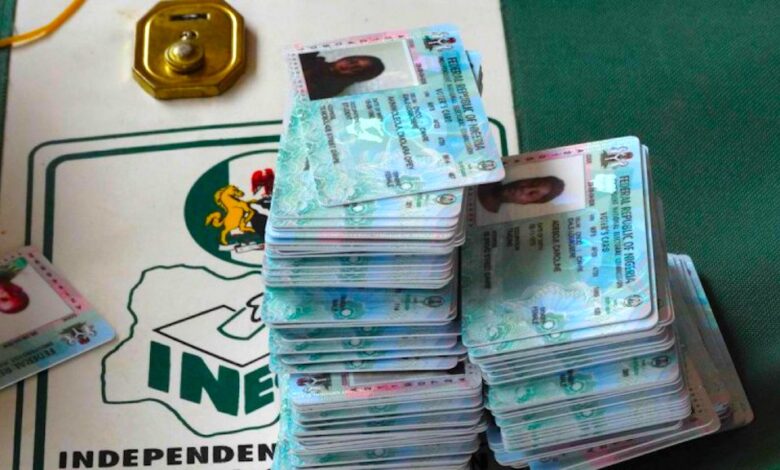
INEC’s latest voter register for the August 15 governorship election lists 2,339,233 registered voters across Osun State, according to recent reports on the commission’s updated register. The register shows significant differences between local government areas. Osogbo has the largest number of registered voters at 167,704, followed by Ife-East with 128,515 and Olorunda with 123,063. At the lower end are Ifedayo with 28,361, Boluwaduro with 29,797 and Atakumosa-West with 44,076.
These differences matter because election outcomes are determined through the aggregate of votes cast across polling units and local government areas. Large electorates can therefore become strategically important, but voters should not assume that a candidate will automatically win a local government because of historical voting patterns.
The register also reinforces an important point: registration is not the same as voting. In the 2022 governorship election, only about 42 percent of registered voters participated. Adeleke received 403,371 votes while Oyetola received 375,027, with 804,450 valid votes recorded. This means that millions of registered voters who do not vote can ultimately have a significant influence on the outcome simply by staying away from the polling units.
What should voters expect from BVAS and result transmission?
Technology remains central to the election. The Bimodal Voter Accreditation System, commonly known as BVAS, is used to verify voters through biometric information. The technology was introduced to strengthen voter accreditation and reduce opportunities for impersonation and multiple voting. However, technology does not eliminate every electoral problem. Equipment failure, network problems, delayed deployment and misunderstanding about the role of BVAS can still generate confusion.
Citizens should therefore understand what BVAS can and cannot do. A BVAS device is primarily an accreditation tool. It does not determine who wins an election. Likewise, a voter should not believe claims that a BVAS machine can automatically “change” a voter’s preferred candidate or alter the final result without evidence.
Result management is another area that will attract attention. Polling-unit results are expected to be uploaded through INEC’s electronic result-management system (IREV), providing citizens and observers with an additional mechanism for checking results.
But citizens should also understand the distinction between a polling-unit result and the final declaration. Social media posts announcing that a candidate has won because one polling unit, ward or local government has produced a result are premature. Election results are progressively collated before the appropriate returning officer makes the official declaration.
This distinction is particularly important because false “results” are among the easiest forms of election misinformation to manufacture.
Security: the biggest immediate concern
Security is likely to be one of the defining issues of the Osun election. The Nigeria Police Force has deployed about 15,000 personnel for the election and has warned political parties, candidates, supporters and residents against electoral violence, vote-buying, voter intimidation and other forms of malpractice.
The police have also deployed a special Commissioner of Police, Erale Samuel Etaifo, to oversee election security arrangements in Osun while the state’s existing police command continues its routine policing responsibilities.
The scale of the deployment reflects the sensitivity of the election. It does not, however, mean that every area where security personnel are deployed is a confirmed “hotspot”, nor does the presence of security personnel itself prove that violence has occurred.
Recent assessments have identified specific areas of concern. The Kimpact Development Initiative, for example, identified Osogbo and Ede South as two critical electoral security pressure points and flagged other local government areas for varying levels of risk. Another assessment by Partners West Africa-Nigeria identified electoral violence, political thuggery and targeted killings among the most immediate threats, alongside kidnapping, cultism, misinformation, vote-buying and concerns about perceived security-agency partisanship.
Reports of political violence have also intensified as the election approaches. A former Transition Monitoring Group chairperson, Abiola Akiyode-Afolabi, raised concerns about escalating political tension and reports of politically motivated violence, warning that the atmosphere could undermine confidence in the election.
Citizens should therefore take security warnings seriously, but they should also verify specific claims. A WhatsApp message saying that a community has been attacked, that the military has taken over a town or that voting has been cancelled because of insecurity should not automatically be believed.
False security information can be as damaging as actual insecurity because it can frighten voters away from polling units.
Vote-buying remains a major electoral integrity issue
Another issue citizens should watch is vote-buying. Nigeria’s previous elections have demonstrated that vote-buying does not always occur through an obvious exchange of cash at a polling unit. Political actors may use intermediaries, coded arrangements, food items, transport, promises of assistance or other mechanisms to influence voters.
The 2022 Osun election provides a useful example. Election observers reported vote-buying in several locations, including the use of coded communication and coupons to secure voter commitments. At the same time, observers reported improvements in election-day logistics and the deployment of electoral materials and personnel.
The lesson is that an election can have relatively strong logistics and still face serious integrity problems. Recent reporting has again brought vote-buying allegations to public attention, including a viral video purportedly showing suspected party agents taking an oath before receiving money allegedly intended for vote-buying. Such allegations require independent verification before they are presented as established facts.
Citizens should be particularly careful about videos showing money, party agents or alleged vote-buying arrangements. A video can be genuine but old, genuine but unrelated to Osun, edited to remove context or entirely fabricated. The existence of a viral video is not evidence that the event occurred as described.
The information war could influence the election
The 2026 election is also an information contest. Political parties, supporters, influencers, media organisations and ordinary citizens will collectively produce an enormous volume of information before and during election day. Some of it will be accurate. Some will be misleading. Some will be deliberately fabricated. False information about polling-unit locations, election postponement, security threats, candidate withdrawal, voting procedures and results can directly influence voter behaviour.
FactCheckAfrica’s recent work ahead of the election has already identified this risk. An expert, Associate Professor Rasheed Adebiyi of Fountain University, warned that false security reports and misleading information about polling-unit locations could suppress voter turnout.
The danger is not limited to ordinary fabricated text. Artificial intelligence now makes it easier to create convincing images, cloned voices and manipulated videos involving politicians, security personnel and electoral officials.
Citizens should therefore question content that appears designed primarily to provoke fear, anger or excitement. A video showing a candidate making an inflammatory statement, a supposed INEC announcement, a screenshot of a result or an audio recording allegedly involving a political actor should be independently verified before it is believed or shared.
This is especially important during the final hours of the campaign and on election day, when the speed of information circulation can make corrections difficult to catch up with.
What should citizens do on election day?
The first step is to confirm where you are registered to vote and ensure that you go to the correct polling unit. Do not rely on social media graphics for polling-unit information when official INEC channels are available.
Arrive prepared to follow the instructions of electoral officials. Accreditation will involve the BVAS process, after which eligible voters will be allowed to vote according to the prescribed procedure. Citizens should also protect the secrecy of their ballot. Do not allow anyone to force you to reveal your vote. Do not hand your ballot or voting credentials to political agents, strangers or unauthorised persons.
If you witness an incident, distinguish between what you personally observed and what someone else told you. For example, “I saw an argument between two party agents at my polling unit” is different from “the election has been cancelled across the entire state.” The first is a direct observation; the second requires authoritative confirmation. Most importantly, do not become an information multiplier for unverified claims.
What happens after voting?
Voting does not end the electoral process. After ballots are counted at the polling unit, results are recorded and the process moves through the prescribed collation stages. Citizens should therefore expect results to emerge progressively rather than simultaneously.
A photograph of a result sheet can provide useful evidence, but it should still be checked for its polling-unit identity, figures, authenticity and consistency with other available information. A result sheet without context can easily be misrepresented. Similarly, unofficial projections, party statements and social media “collations” should not be presented as the official result.
Only the appropriate INEC returning officer has the authority to declare the final result. This distinction is particularly important in Osun because the state’s electoral history shows that disputes can move from the polling unit to the courtroom. The 2018 and 2022 governorship elections were both challenged in court, with the courts ultimately affirming the winners declared after the respective elections.
Why Osun matters beyond Osun
The significance of the election extends beyond the state. Nigeria is already preparing for the 2027 general elections. Lessons from Osun will therefore be relevant to the wider electoral system, particularly around technology, logistics, security, misinformation, vote-buying, political violence and voter participation. Osun has historically functioned as a highly competitive political environment. Its 2022 election demonstrated that an incumbent can be defeated, while its post-election litigation demonstrated how electoral disputes can continue long after voting has ended.
The 2026 election therefore provides another opportunity to test whether political competition can be managed without violence, whether technology can improve transparency, whether citizens will turn out to vote and whether political actors will accept legitimate outcomes.
As Osun approaches August 15, citizens should therefore verify before they share, question before they believe and remain calm when confronted with information designed to provoke fear or anger. The credibility of the election will ultimately depend not only on what happens inside the polling units, but also on what Nigerians choose to believe, share and amplify outside them.
FactCheckAfrica has established the TruthGuard Election Integrity and Misinformation Situation Room to strengthen monitoring of misinformation, disinformation and other forms of information disorder around the Osun 2026 governorship election. The initiative brings together fact-checking, monitoring and research efforts to identify emerging narratives, verify suspicious claims and provide citizens with reliable information. As part of this work, FactCheckAfrica has also trained journalists, civil society organisations, youth leaders and digital creators in Osun to identify and verify manipulated and misleading content, recognising that false security reports, fabricated polling-unit information and other deceptive narratives can influence voter behaviour and even suppress turnout.
Citizens are encouraged to play an active role in protecting the information environment by sharing suspicious claims, messages, images, videos or election-related information they are unsure about with the TruthGuard Situation Room for verification via its WhatsApp hotline: +2348128575778. Rather than forwarding uncertain information, citizens can submit it for verification and help prevent false or misleading claims from spreading during the election period.
Editorial Note: This explainer is published ahead of the August 15, 2026 Osun State governorship election to help citizens understand the candidates, electoral process, voter statistics, security concerns, technology, political issues, misinformation risks and what to watch before, during and after voting. Information and figures are based on available official records and credible reports reviewed as of August 12, 2026. Some election-day details may change as INEC and security agencies issue further updates.